You don’t need to dive abroad…
June 16, 2017
Portland Coastguard Helicopter last day of operation…
June 30, 2017Wrecks Pt2
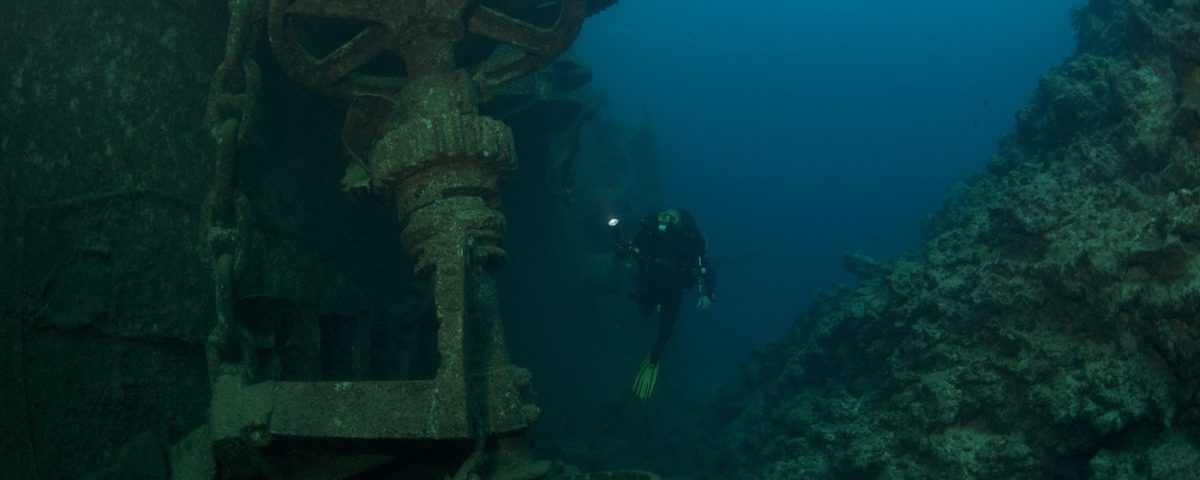
The second & final part of this series about wrecks takes us to the heart of a steam ship, its engine from there aft to the stern.
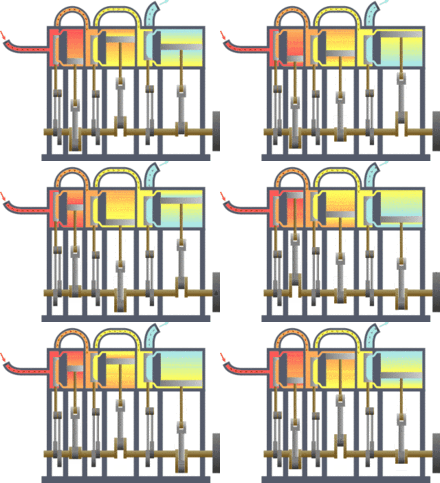
It is worth understanding how the ubiquitous triple expansion engine works, the following animation may help:
When seen underwater you get something like this:
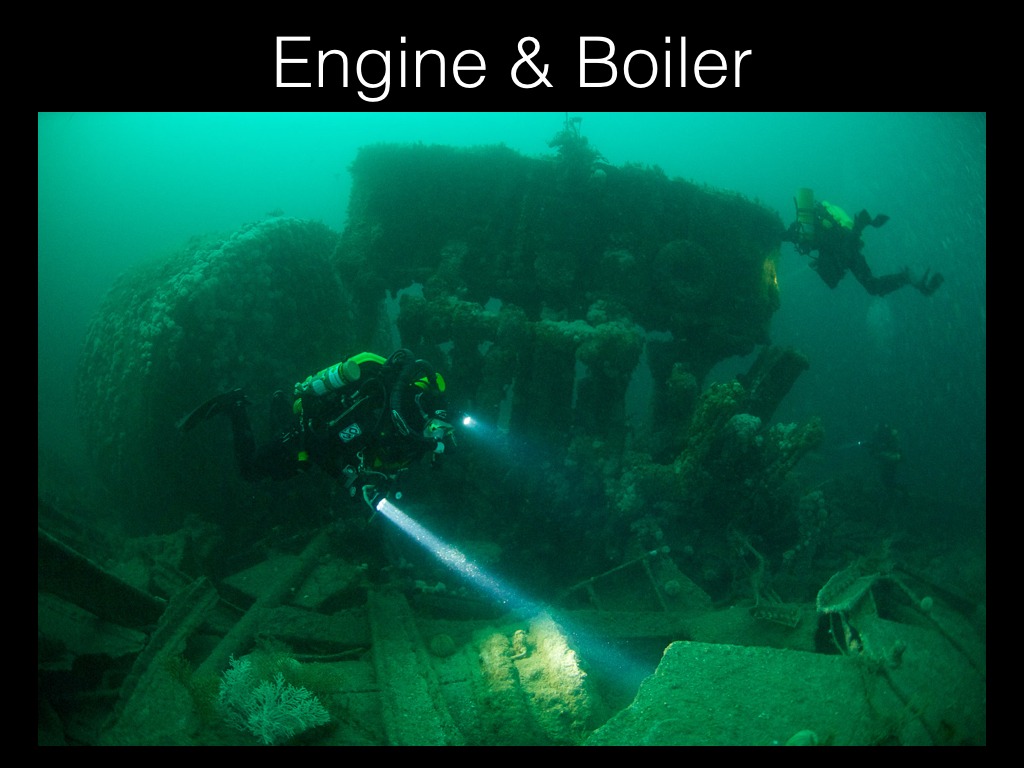
Obviously any steam engine needs its source of power which comes from steam produced by a (one or more) boiler. On UK wrecks it is often the boiler that is the only recognisable part that remains but if the engine is in one piece both will be close together. Watch out for gauges near the boilers.
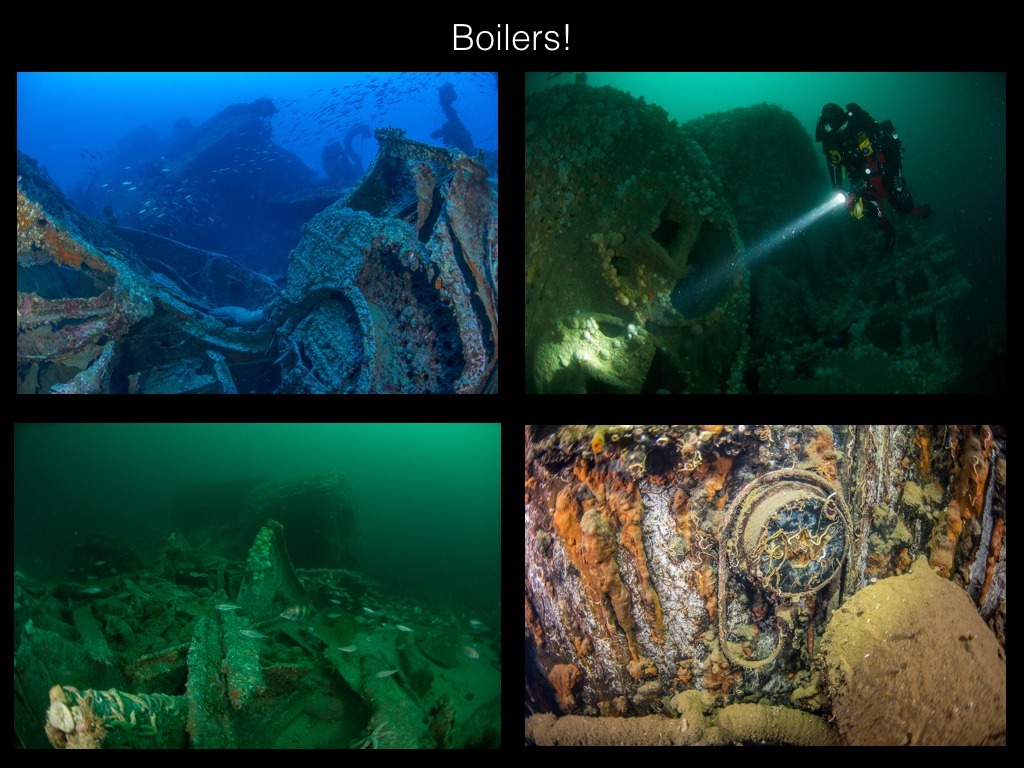
UK wrecks will have been battered by the weather, currents & tides so much the ship structure is damaged. On some deeper (less affected) wrecks and on those wrecks situated in calmer waters overseas you will often find a much better preserved wreck. This can add confusion which I hope to clear up:
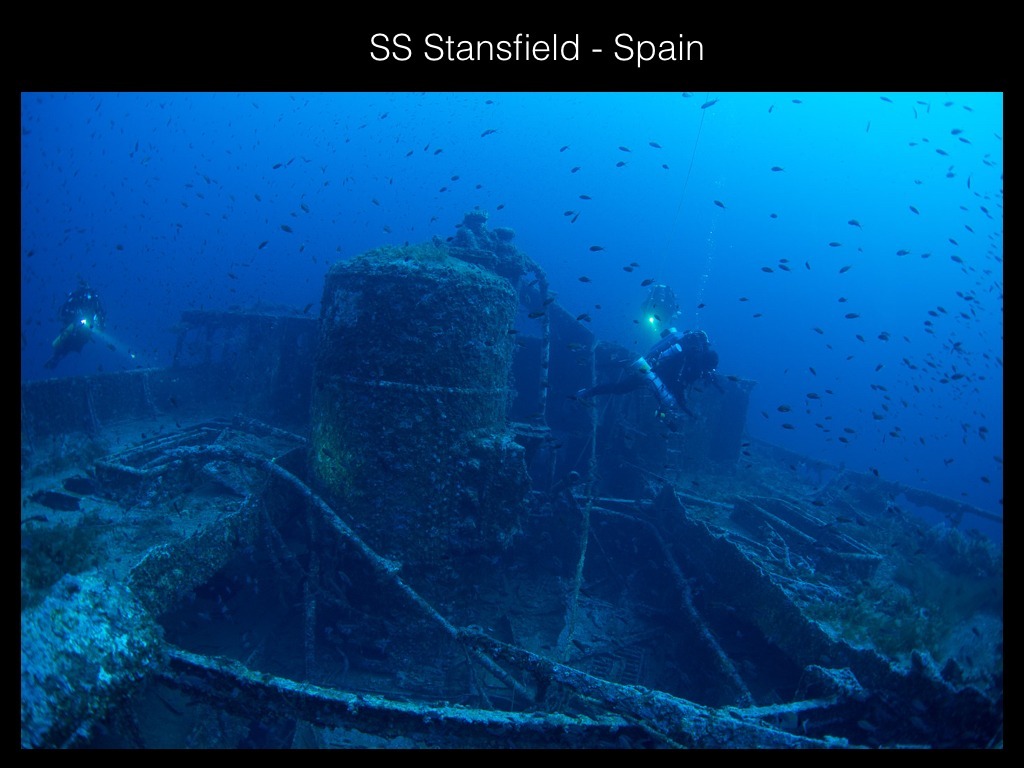
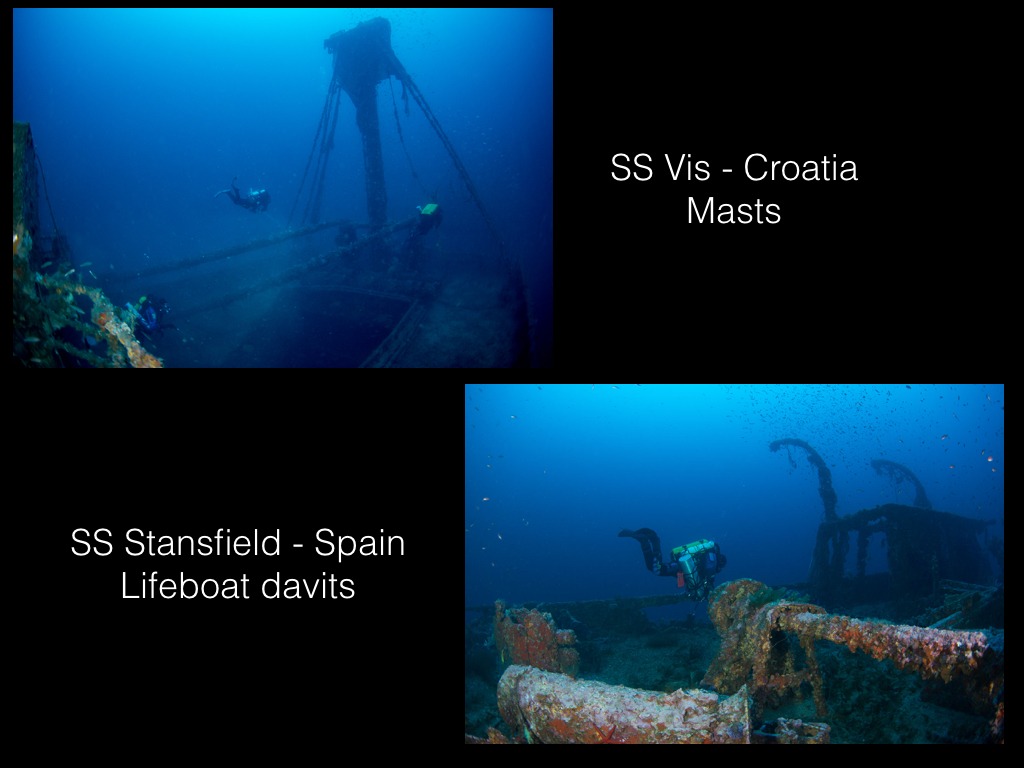
The next images were all taken on the First World War casualty SS Stansfield, this wreck is located off the Spanish coast near Alicante in about 60m of water. Mediterranean wrecks are often much better preserved than those around the UK.

This image shows the structure over he engine room, a pitched roof with windows. The upright cylinder is the condenser which takes exhaust steam prior to it being discharged through the funnel
Deck level view:
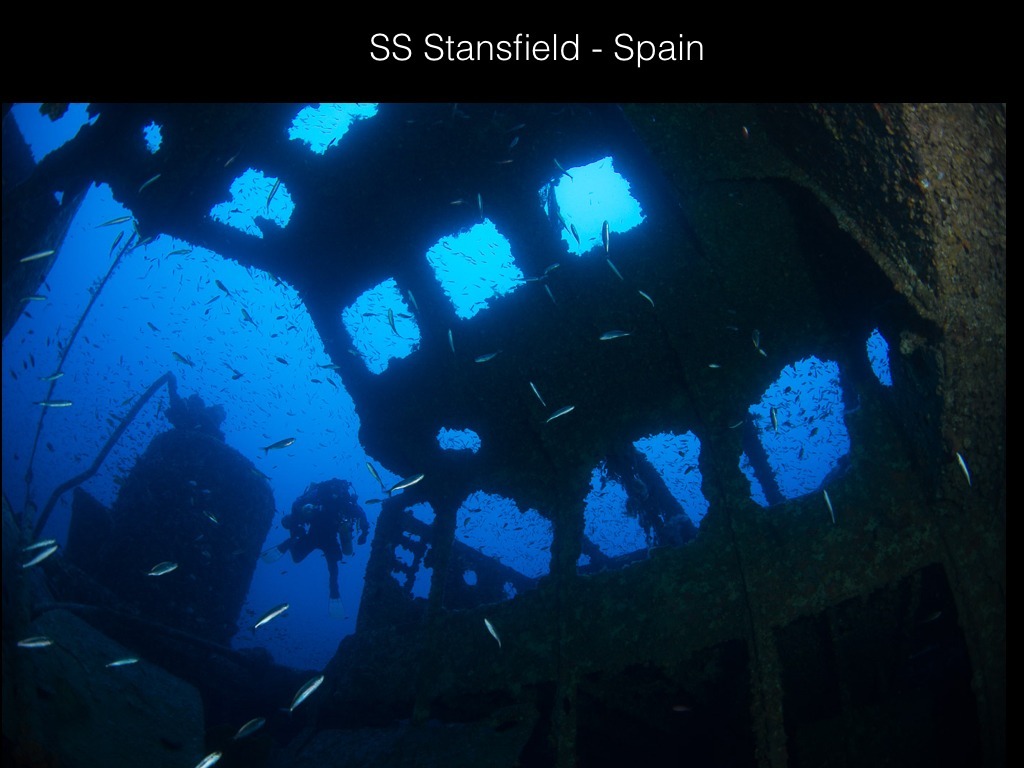
Under the roof looking towards the condenser, there is a lot of space in here:
Looking down and the circular structure is part of the engine block:
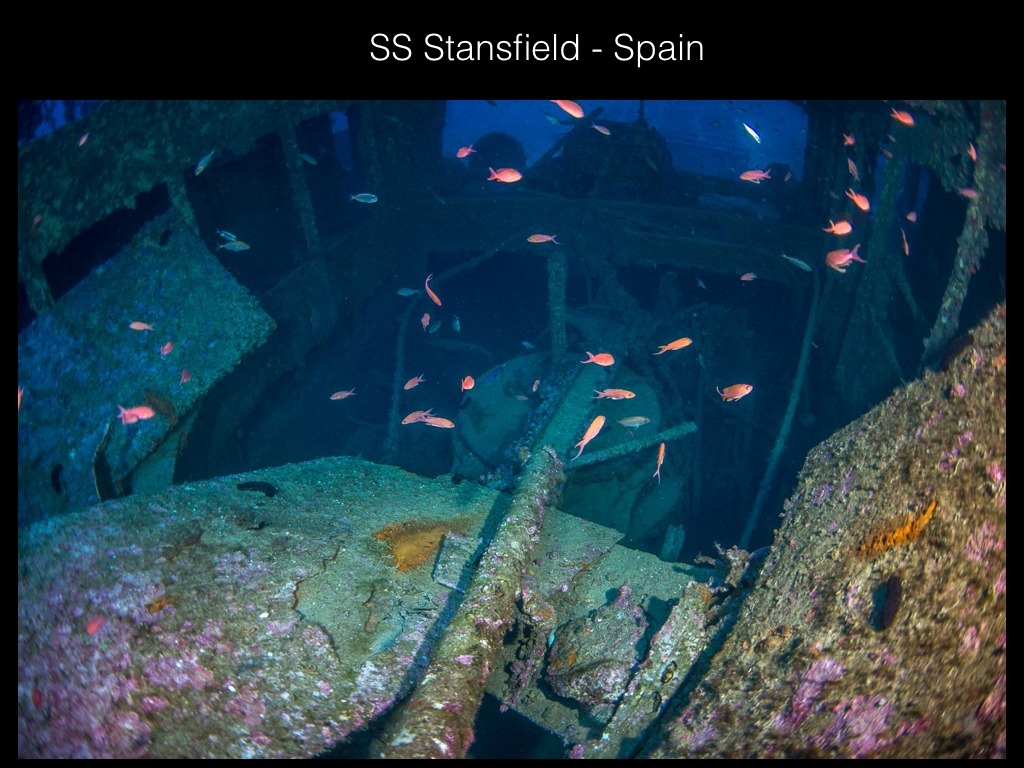
From more directly above the different cylinders can be seen, the largest will be the lowest pressure cylinder:
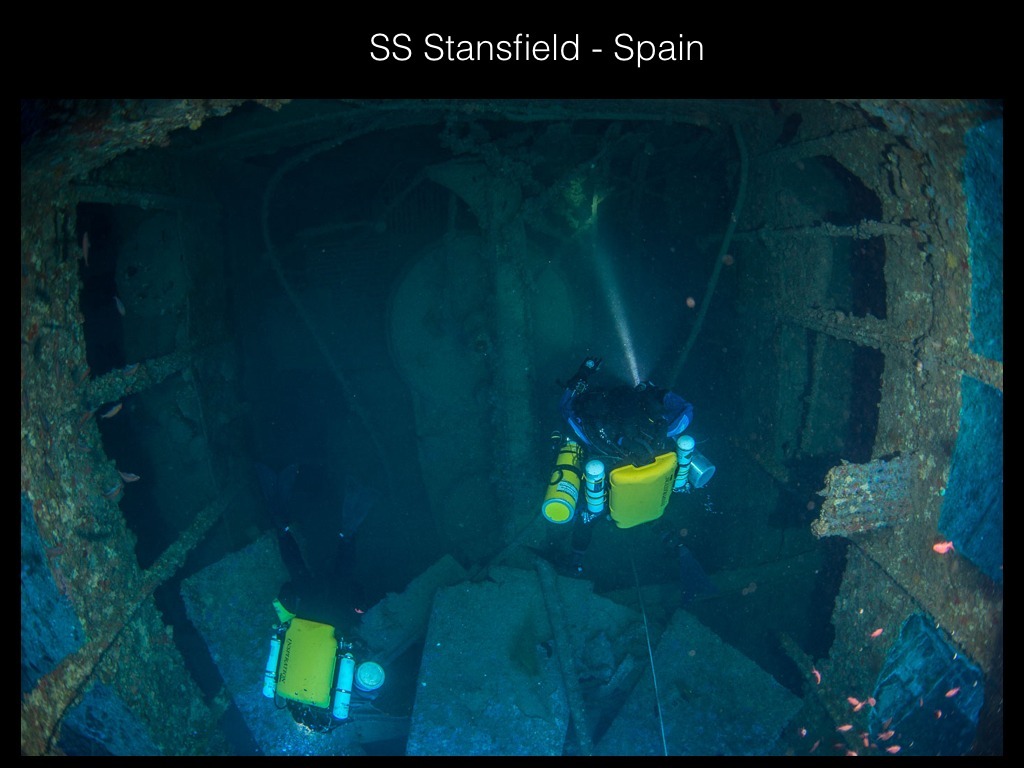
Moving to other wrecks:
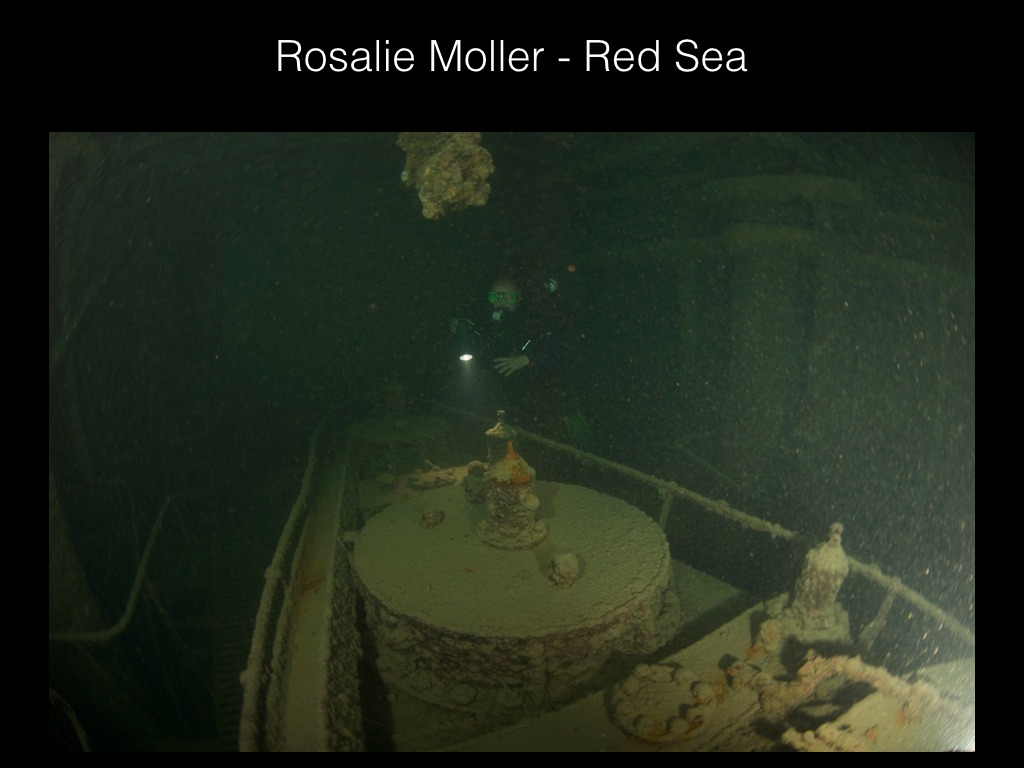
The Rosalie Moller even shows the hand rails around the engine. If you look carefully you can see the walkway gratings on the left side of the engine. the raised structures are over pressure valves.
The configuration is predictable on any wreck powered by a triple expansion engine.
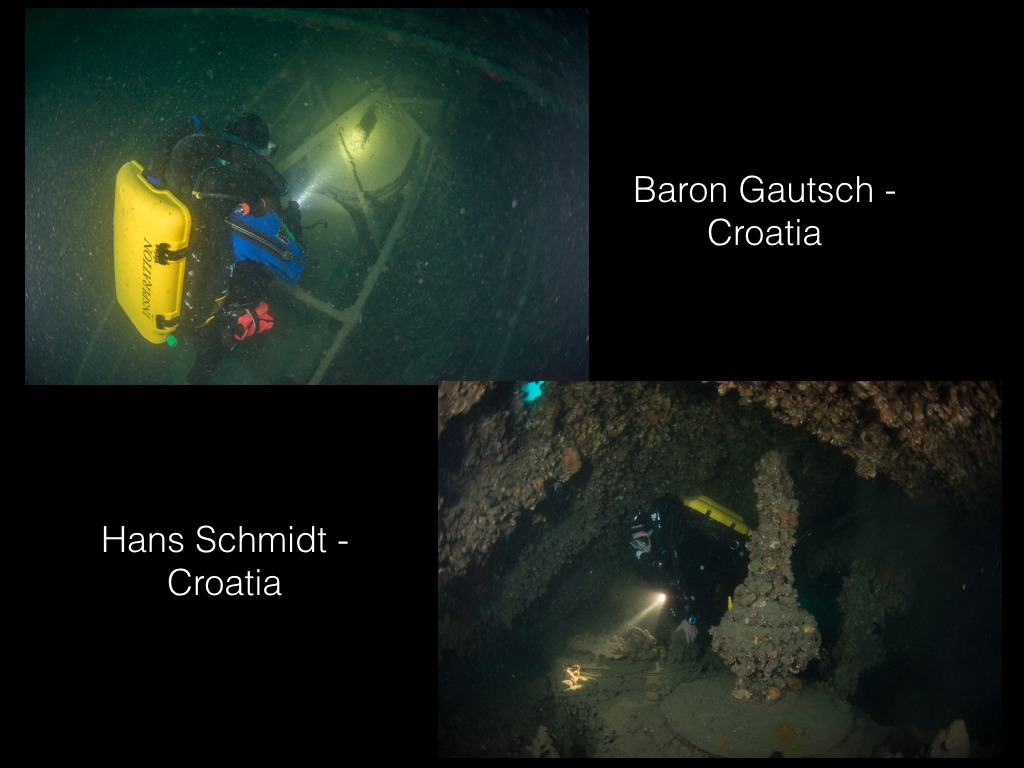
The skylight arrangement over the engine room is similarly of a fairly standard arrangement. The opening shutters are to allow engine room ventilation.

Back in the UK often the engine & boiler are all that remains standing proud on a wreck.
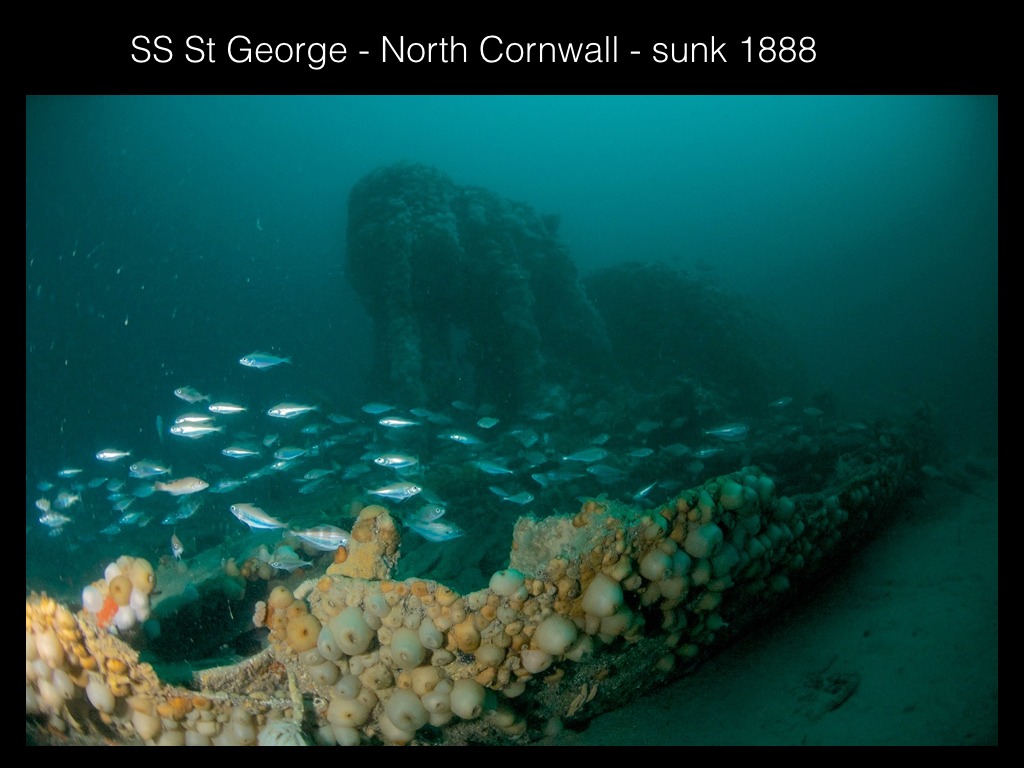
Sometimes the engine has broken up with just a mass of con-rods & support structures remaining.
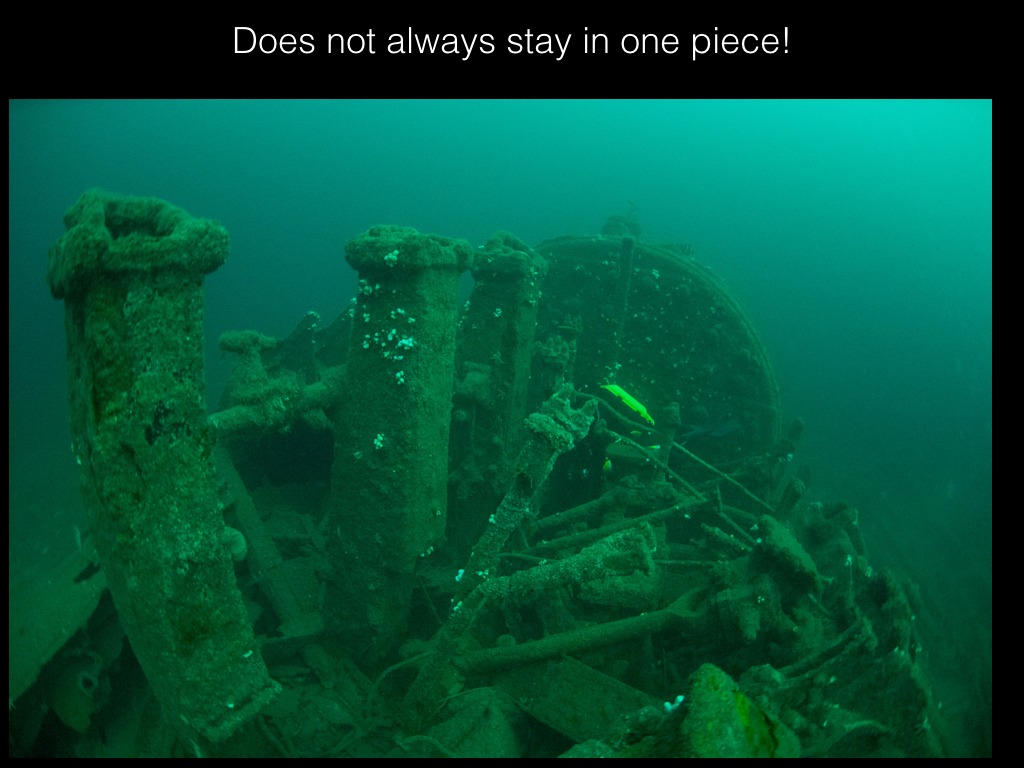
Not just the UK, shallow wrecks anywhere in the world are likely to have been affected by the elements.
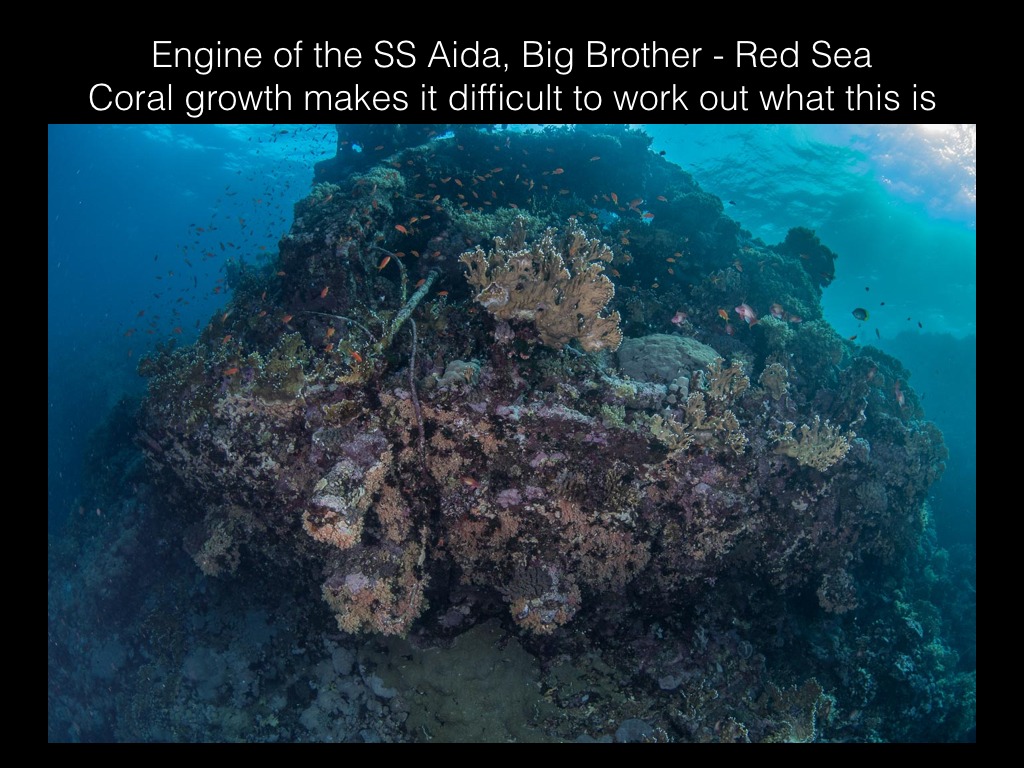
It is not all steam engines!
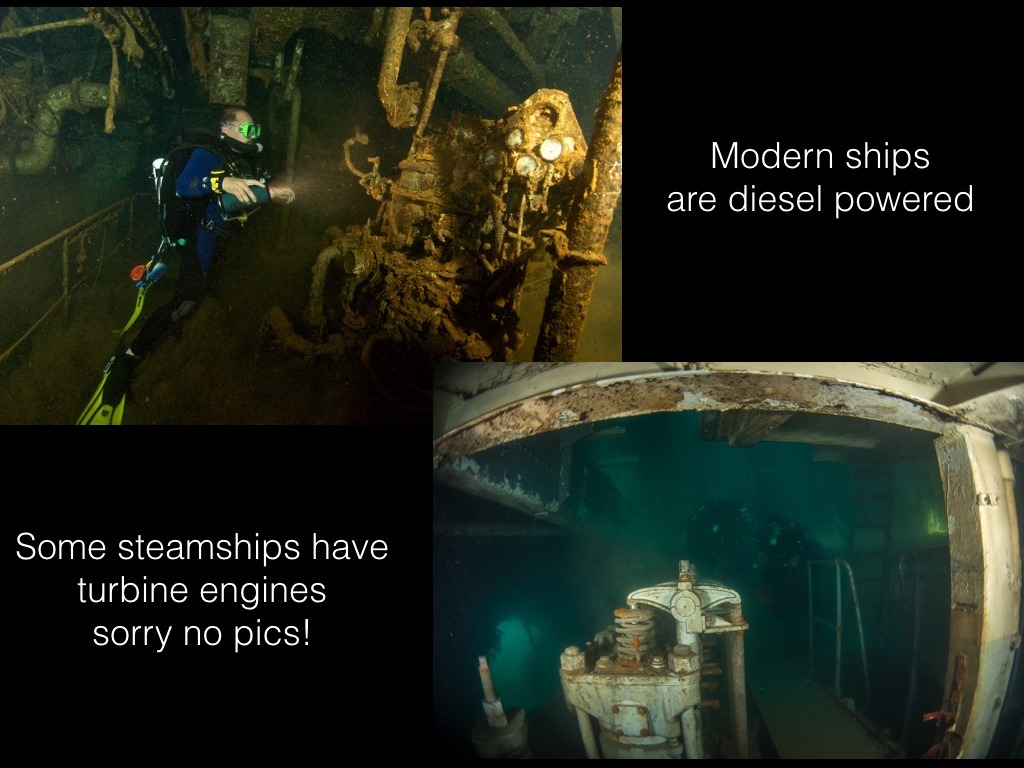
Leaving the engine room we follow the drive shaft aft:
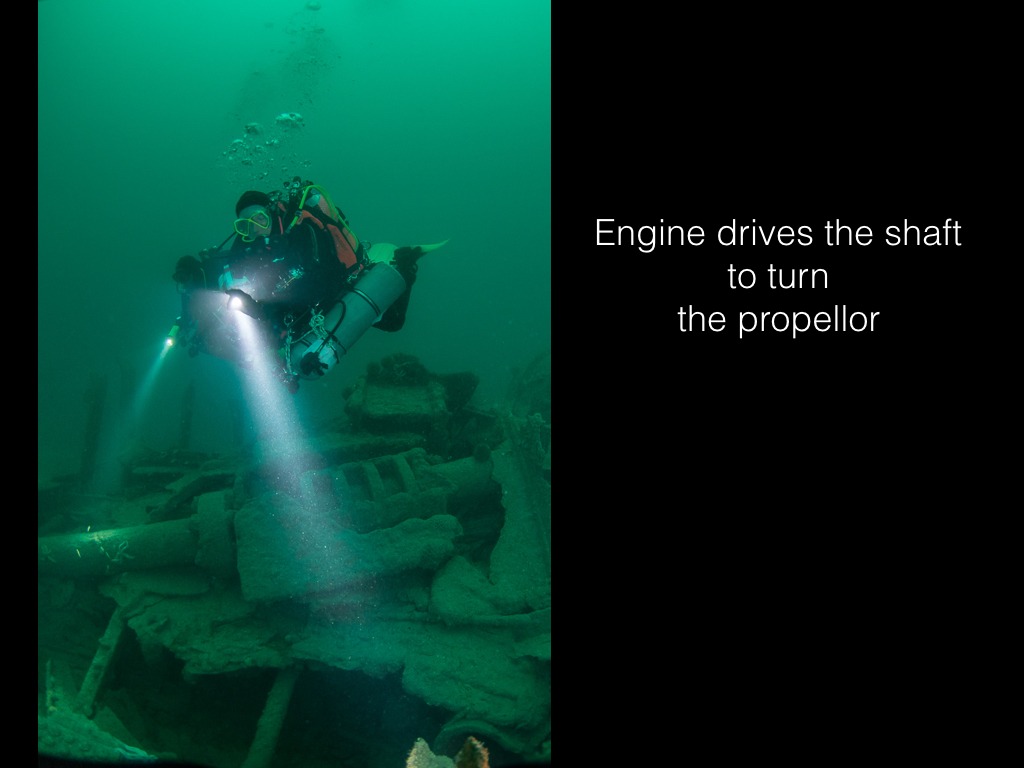
Eventually reaching the propellor & stern of the ship, you may of course pass cargo holds etc. on the way but much will depend on the type of ship.
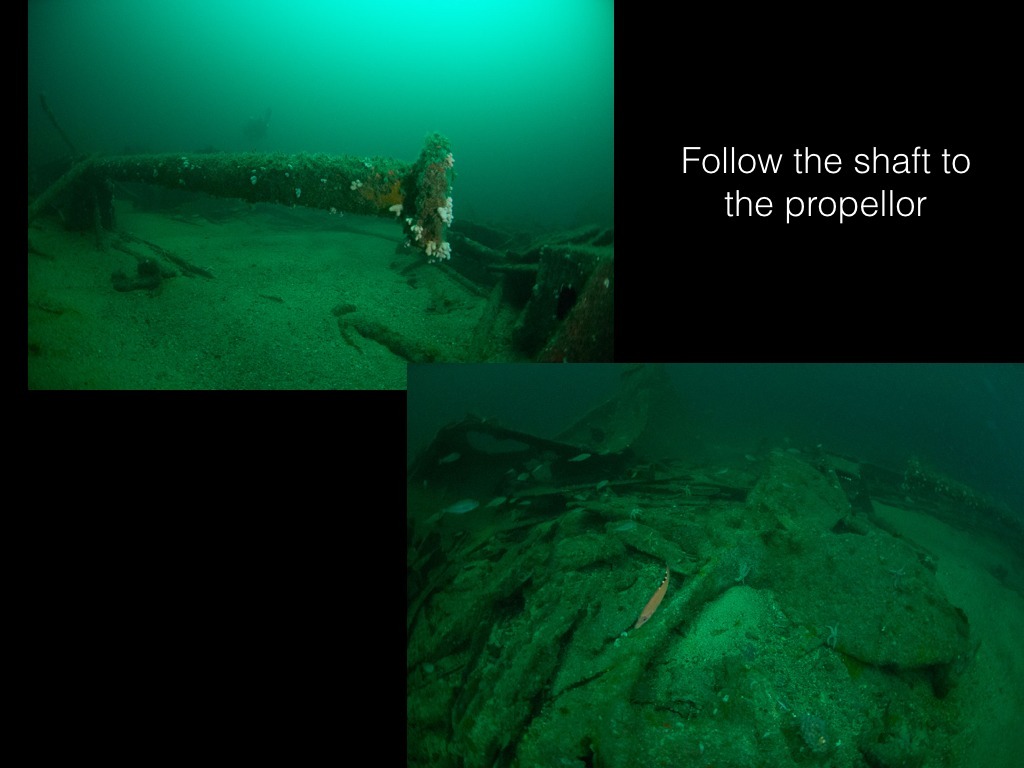
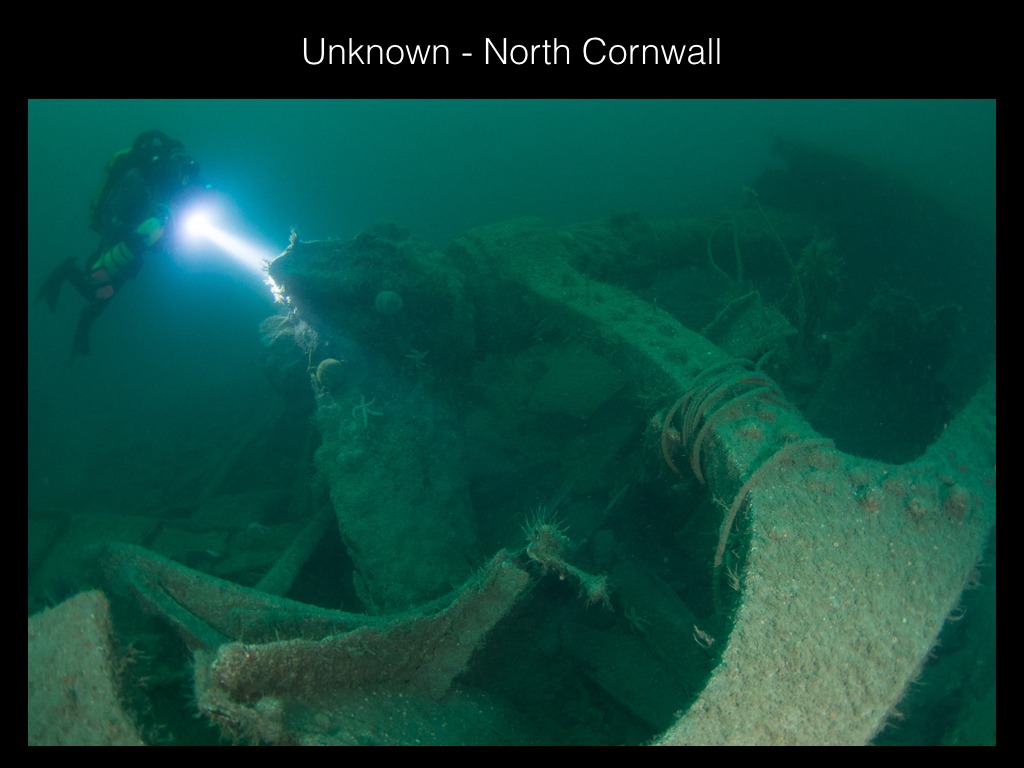
If a prop is damaged it may not be immediately apparent what it is.
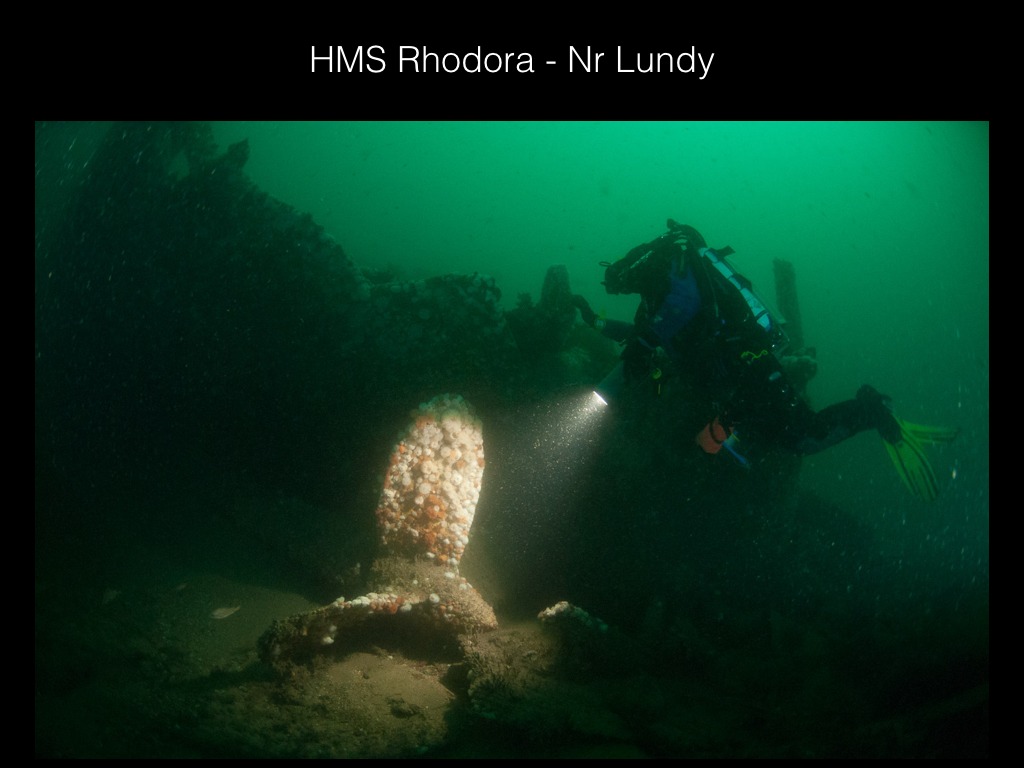
Often a prop is instantly recognisable:
Finally the rudder, this has a number of associated structures that are worth knowing about.
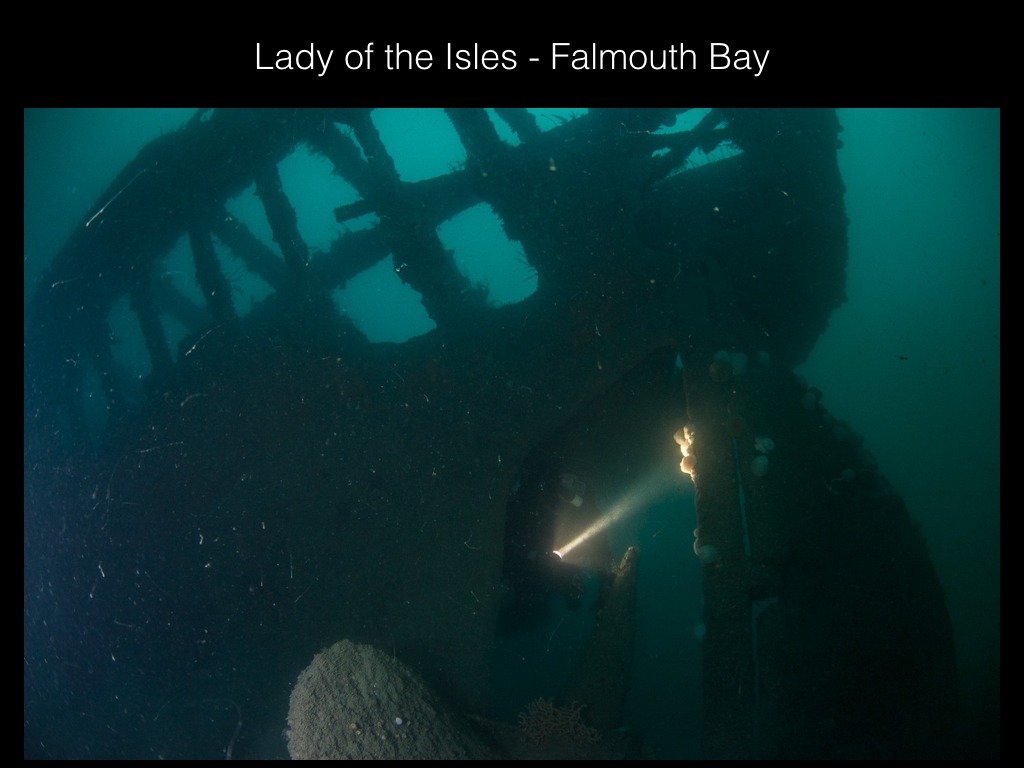
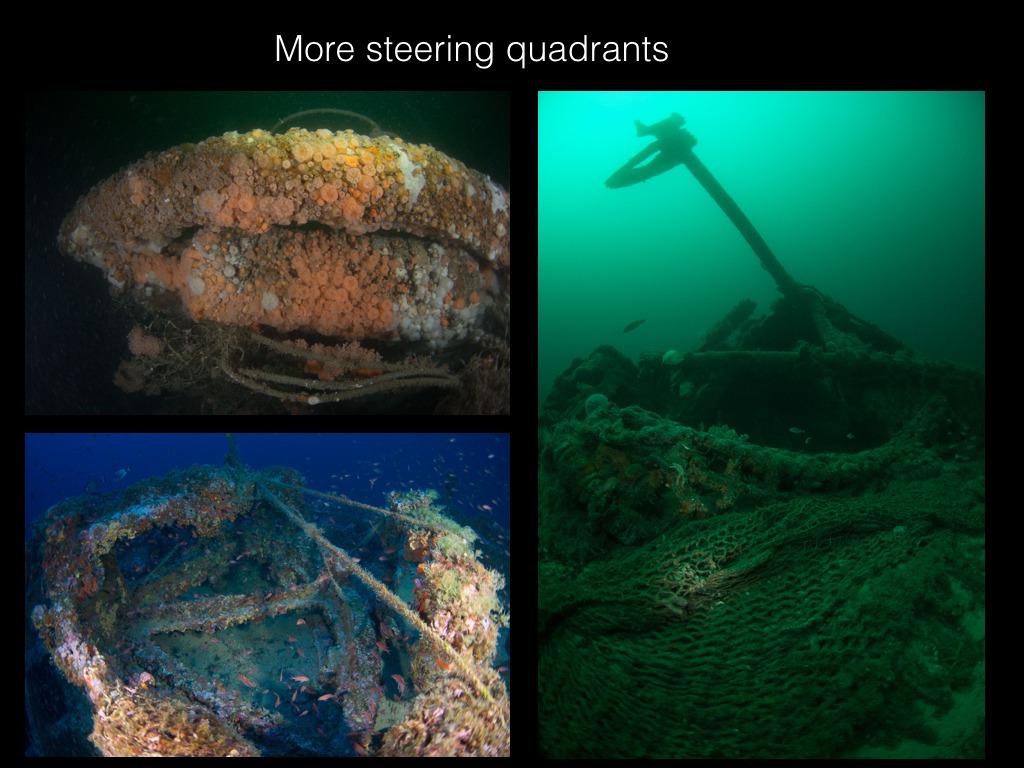
The steering quadrant is what connects the ships wheel to the rudder to transfer the turns of the wheel to movement of the rudder.
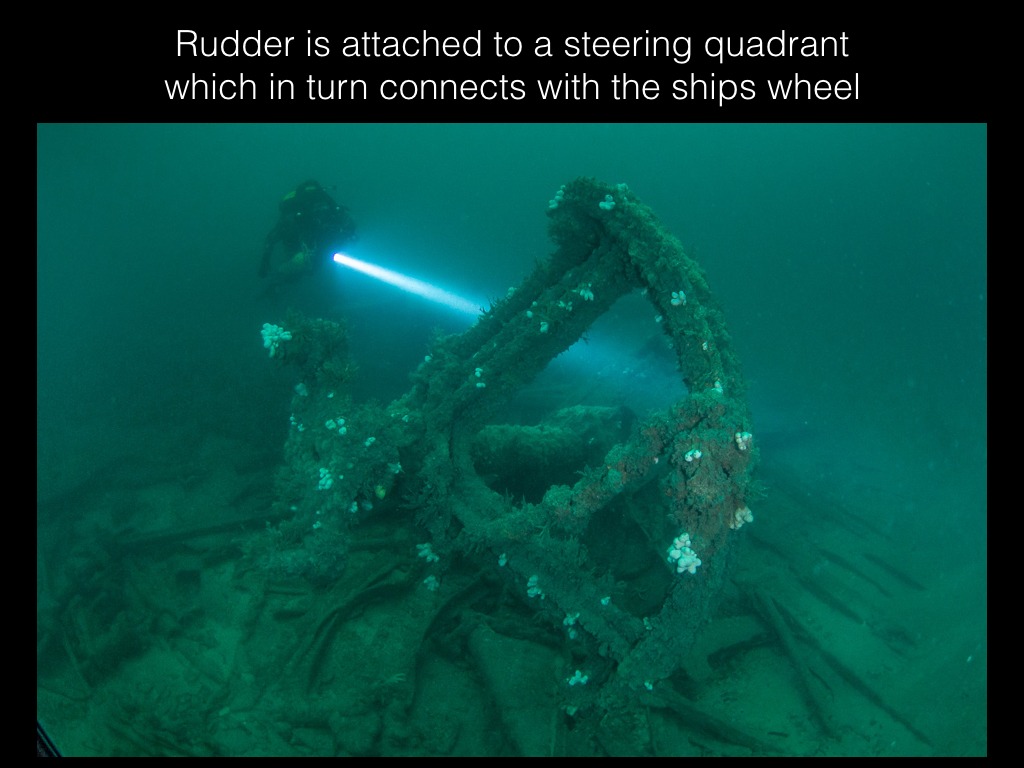
It is a very solid structure that can remain when all about is smashed, finding one on a scrap-yard wreck will help orientation.
On better preserved wrecks look out for the steering position or helm.
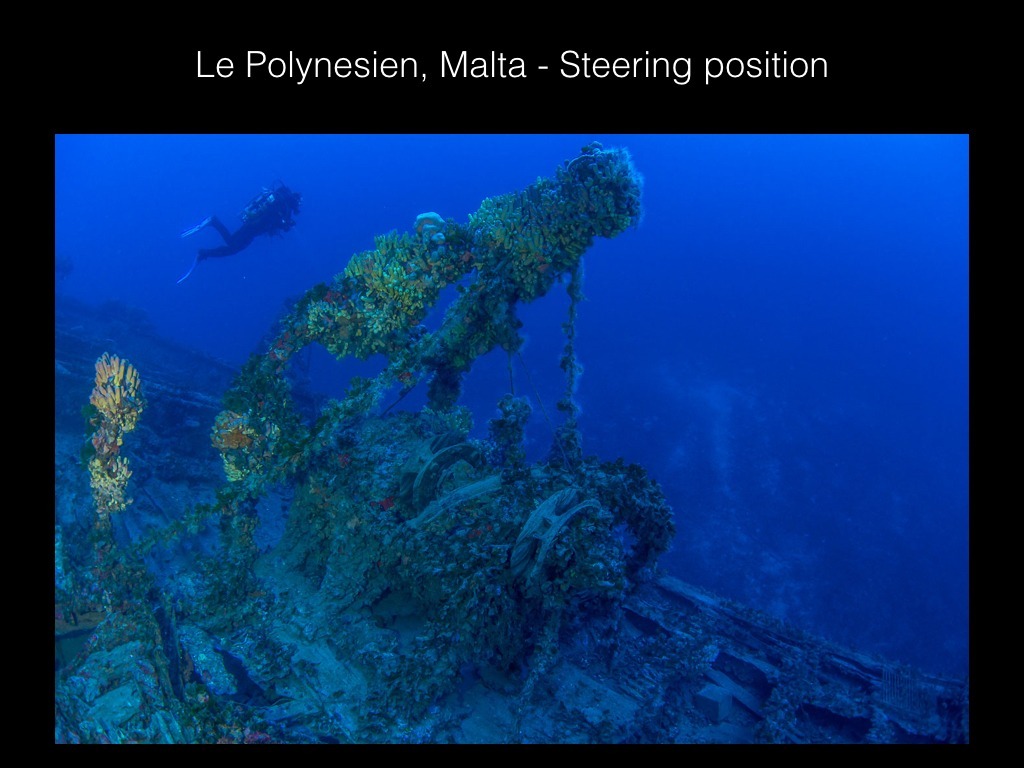
If lucky parts of the ships wheel may be present.

Having completed our tour it is worth mentioning some oddities:
Many ships carried a spare propellor on deck, finding one of these in low visibility can be very confusing!
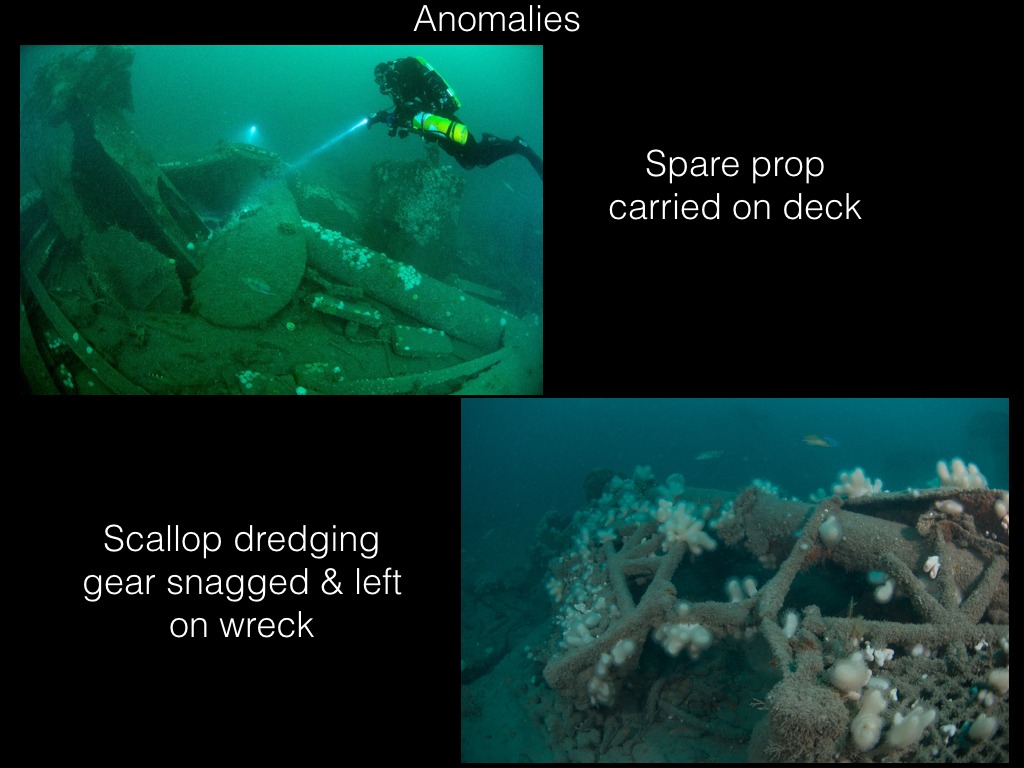
Beware of artefacts on the wreck that did not originally belong to the wreck! In addition old fishing net can make identification of structures much more difficult.
On a well preserved wreck in good visibility the vista can sometimes be outstanding!
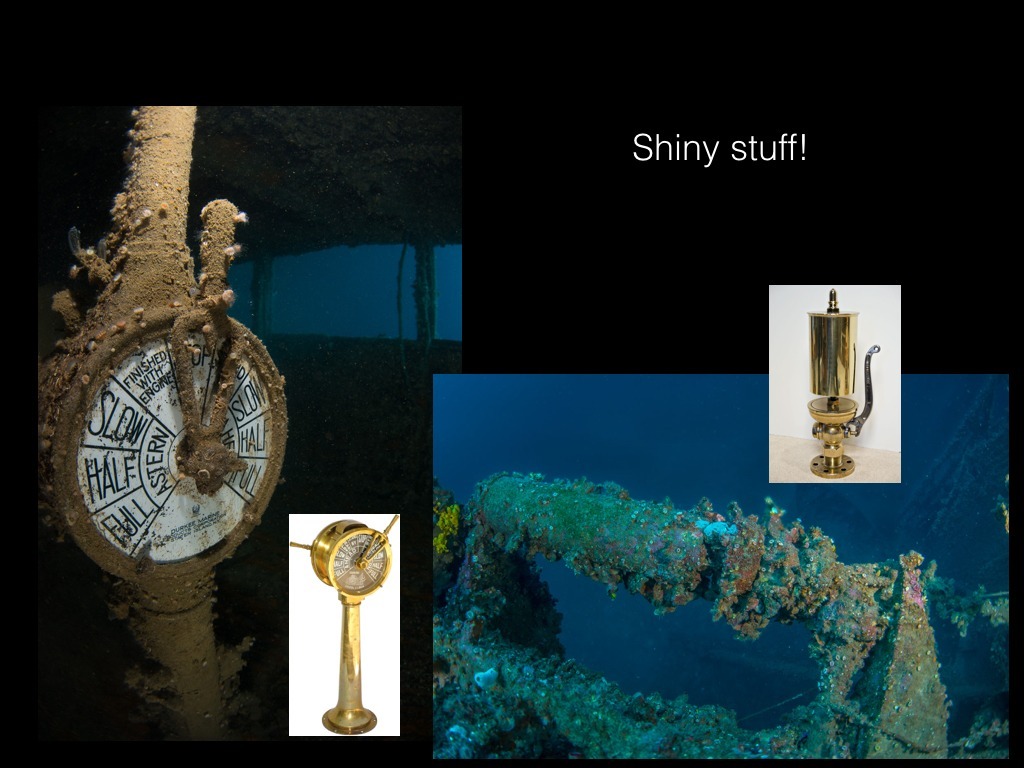
Everyone likes to see the shiny stuff, you can understand why these things are removed from wrecks. When you do see them in situ it is fantastic, they will mainly be situated on the bridge which usually is close to the engine room.
I hope this guide will help people understand what they are looking at while wreck diving, all that remains to be said is too get out there and explore…..