How do I improve my Situation Awareness?
October 27, 2022
Brad Wakefield – Commercial Diver Training Photos
November 11, 2022The Guiding Game
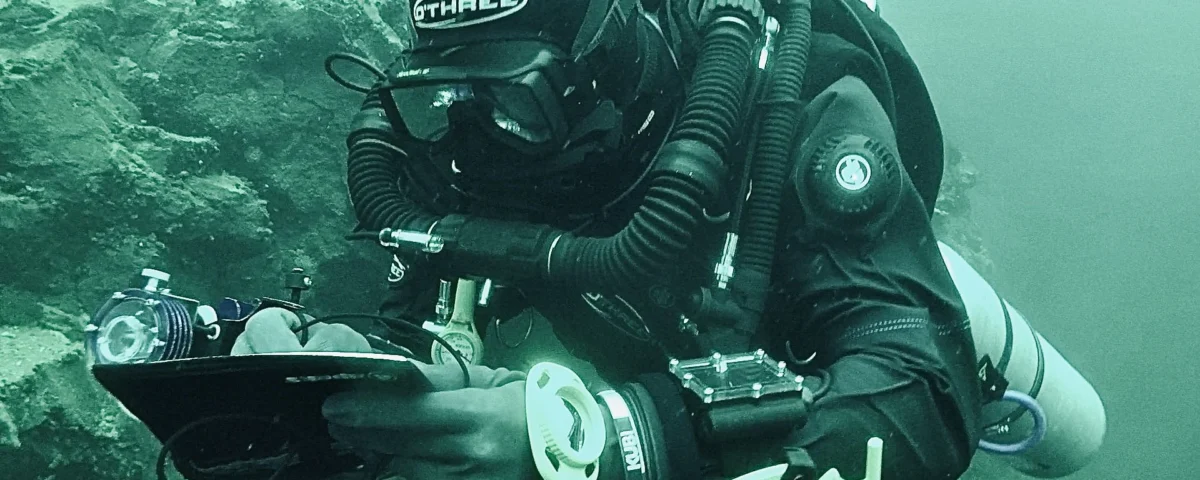
“How do we manage the risk to ourselves and our student or guided diver when we take them into the overhead or technical diving realm”
How often have you heard the saying “the most dangerous thing Iʼll do today is driving my car to and from the dive site” Well maybe it would be, if you the guide / instructor had not failed to do your homework on your diver.
We always teach during Technical diving courses that a good team is effective and safe, a good team is training together, talking together pre and post dive and importantly conducting good diving to the plan or if problems arise then working through the bail out plan. But as an instructor or guide, I do not to start with a team, I especially donʼt have a team if the divers on the course have never met before. Now Iʼm supposed to take them into the overhead environment or into the deep ocean.
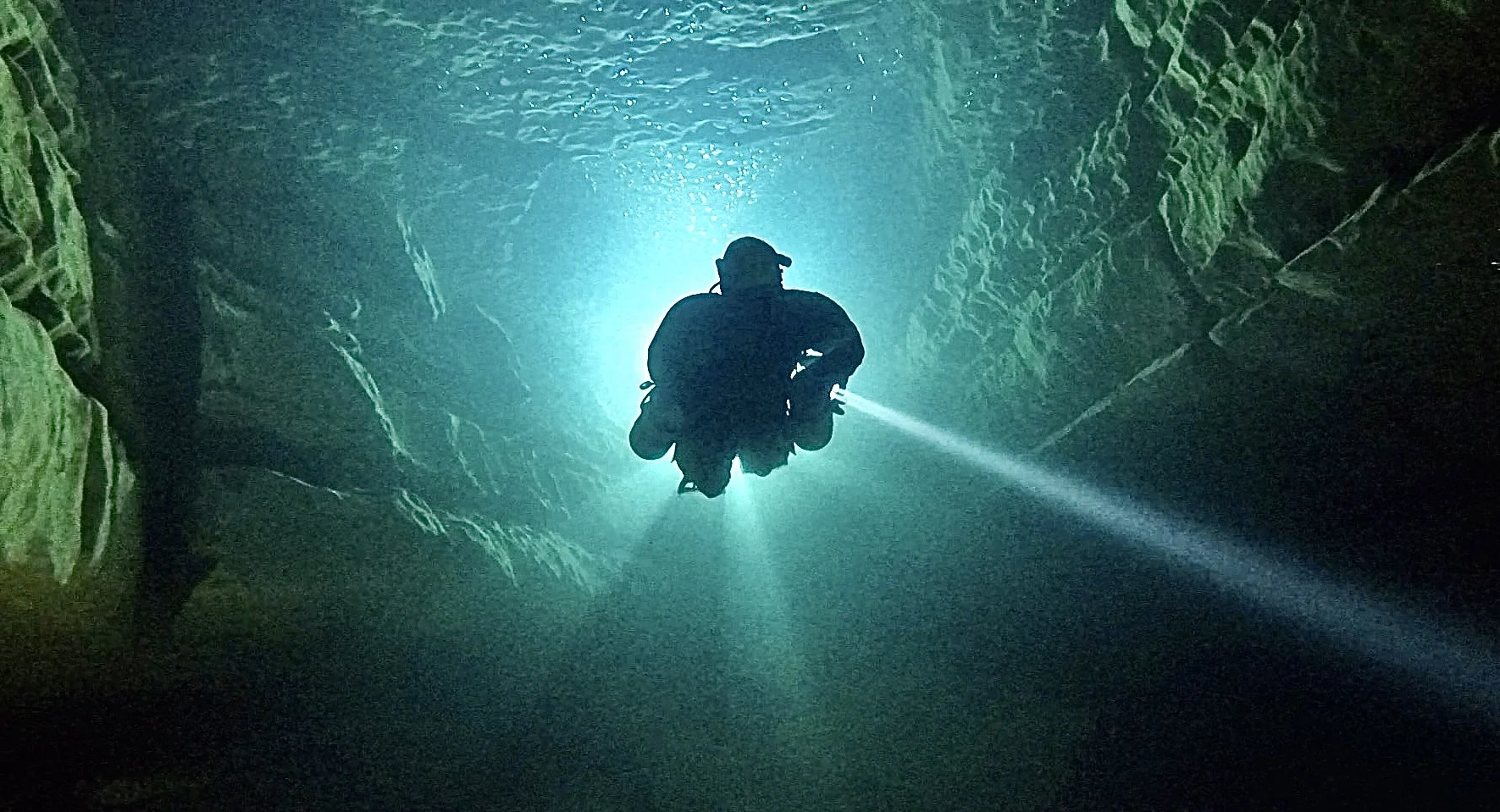
I think itʼs best we slow down and back up a bit.
Back a few years, I climbed a mountain in Switzerland called the Monch 4107m rated PD ( Peu Difficile ) in English “ A little Difficult” with my partner. Now when Iʼm not diving or underground I spend time in the mountains for relaxation and also for fitness and stamina not generally obtained when diving, but thatʼs another issue! We have climbed some biggish mountains around the world and always fancied having a go at the Monch. Itʼs a fairly quick climb as you start high up the mountain from a mountain railway station but itʼs steep ridge lines and knife edge extremely exposed summit ridge, demand knowledge and care. That knowledge in this particular environment we lacked, so decided to seek out and hire a guide through the guides office. Now many questions from the office on what experience and equipment we had followed, payment for the guide services and a time to meet our guide in the morning. Starting early in the morning from the valley floor and not from the mountain hut at the base of the route. Meant we had to move very fast to be up and down the mountain before the sun made the September snow unstable. Our mistake here was saving money on not staying at the mountain hut the night before and thinking our fast pace was in some way comparable to a Swiss mountain guide born in the mountains ! Our guide looked at us in concern tempered with occasional flashes of disgust at the speed we moved, we needed more time, time we would have had if we started early from the mountain hut and not the valley floor. Things improved on the knife edge ridge as our ability to horizontally cross it, did not need the pure speed of ascent of our guide. On the summit our guide was pleasantly surprised we had made up some time on the ridge. The descent was also just about fast enough, with our familiarity with rope systems making his job easier. Once down I thanked our guide and watched him race back down the trail to the train whilst we sat in a heap and considered the food we had with us.
I started thinking we had made mistakes as clients, driven by summit fever to reach the top, especially after paying the guides fee, in Switzerland thatʼs not cheap! We underestimated our fitness and technical ability on the climb even though itʼs rated PD in the guide book. Also the guide was cross at himself and the office for allowing them to book us on that climb in that style with out the guide himself having met us or done a training session together first. He basically had limited options on a mountain with a fall potential that would kill, with clients he did not know. He was a superb mountain guide, but I learnt much that day, as I suspect did our guide.
Back to diving. Now as a instructor and guide in the cave environment I follow certain personal rules when taking on student divers or trained divers for guiding. As divers you can also follow these rules. We broke some of our own rules in the mountains.
 My initial contact with the diver is generally messages or email, occasionally with a older diver a phone call ! I start by listening to them tell me what it is they would like to achieve and I tell them about my background and explain how we could work together to achieve the divers goals. If the diver uses the words “ I need this certification “ alarm bells should start sounding. Especially if what they are needing is the top of the pile without building a good foundation.
If I donʼt know the diver, I will do a bit of research, social media is fantastic for checking out a divers past diving adventures. Are they horizontal in the water or vertical, doing lots of diving or one trip a year. Also talking to the divers past instructors is a fantastic way to get a heads up on the diver. This also helps me work out if student and instructor are compatible. If you donʼt get on with the diver or have very different ideas or ethos itʼs going to be a short relationship.
If the diver is looking to start at the start of Technical Diving thatʼs an easy safe place to be, TDI Intro to Tech, Cavern or Open Water Sidemount gives us time to have some good theory sessions and confined water or shallow water diving. The student gets used to the instructor and the instructor can check on the
students abilities and above all comfort in the underwater world and chosen equipment. For the instructor this is the place to be relaxed with the student and start building foundations for bigger and better dives. Iʼve numerous students from the start that are now good dive partners and friends.
As happens frequently we get divers contact us that have done some TDI training in another country and obviously with a different instructor and then would like to continue, once home in the UK. Generally the diver has done a Cavern course or Intro to cave and would now like to complete Full Cave. We have a couple of issues here, the environments of say caves in Yucatan Mexico are very different, the types of line in use are different, as are some of the diving protocols. Plus I may not know the divers instructor personally, so itʼs a bit more difficult to find out relevant information and history. What we generally suggest is an easy dayʼs open water skills session followed by a dayʼs guiding underground to get used to a very different environment from what they trained in. This allows me the instructor and guide to see what skill set we have and also the diver to check they like and can work with me underground. Once this is done we then discuss the requirements for completing the next TDI training course. Now most divers, once this process is explained and understood are happy to proceed, occasionally we get divers that are not interested in two days of pre course training and are just thinking we want two extra days paid work. Frankly I want to know we can both work together in this environment safely, before swimming a distance from home underground. At least I know the answer when this situation occasionally occurs!
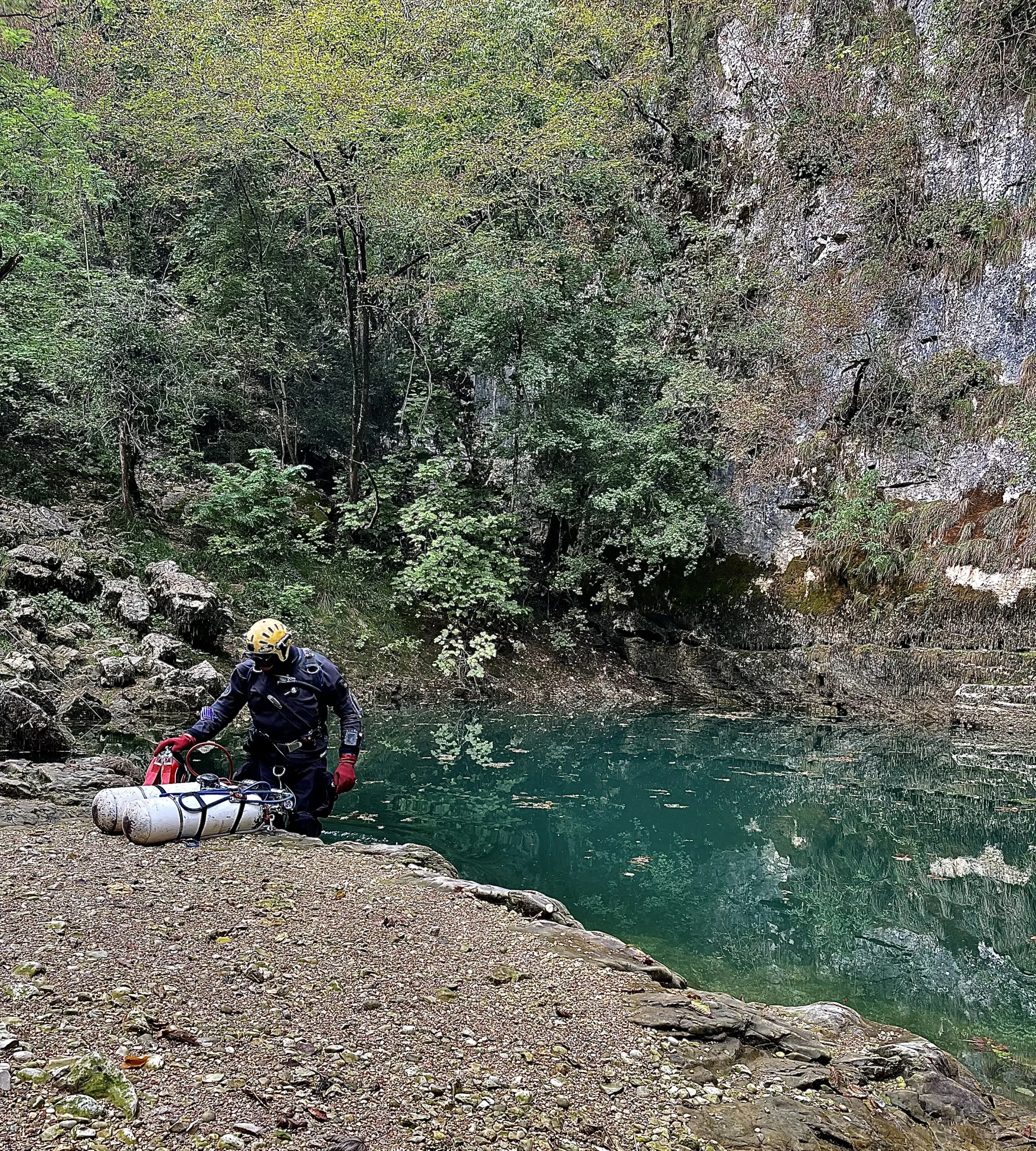 Guiding fully Qualified Divers or guiding divers up to the divers current Qualification we do fairly regularly. A lot of divers like to gain experience in various sites under the watchful eyes of the Instructor / Guide. They also get to find out about the site, location, access agreements and how to actually reach the dive base safely, so they can return with there own team at a later date. With divers I have worked with previously this is not a problem, itʼs kind of an extension of the training but without the pressure of the diver being on a course. For divers I donʼt know or never dived with before we try to use sites that we know well, but give a good dive for the visiting diver. I donʼt want any environment surprises and the visiting divers want a good dive and I want them to have a good dive. It may sound obvious but making sure we have plenty of available gas is crucial, Iʼll often have a spare stage cylinder thatʼs not used and for emergencies only. Nobody died from having to much gas! Also a spare primary light on site can be a good dive saver, Iʼve lost count of the number of
primary light failures Iʼve seen from many different manufacturers. Another common problem I see guiding is when divers change from drysuit under-suits that they used in Mexico to a heavy under-suit system for 7.c water in the UK. Three things go wrong here, they do not adjust the Sidemount harness so itʼs now uncomfortably tight, they are unable to operate the fancy boltsnaps in large drygloves and the diver is underweighted ! Occasionally we get visiting divers that have a “must dive this” request, most of the time it is fine but sometimes you just know that even after explaining the site and dive plan the diver does not fully appreciate the physical and technical nature of the dive. Sometimes they need to learn the hard way and we have to be the unpopular guide and call the dive sometimes before itʼs even started.
When I know a diver well, I will suggest those bigger special dives that require more planning and sometimes extra training to complete the dive safely. The diver by this point will be more of a dive partner and proven to be calm and steady in the environment. Extra gas and sometimes another guide as a support diver to either lead the dive or swim at the rear of the team, with the best will in the world, I canʼt see my diver at every point during the dive especially cave dives when passing restrictions. Those dives are really special but very tiring as you are constantly watching for trouble and ensuring all is following the plan. They also give the biggest smiles after the dive.
The art of guiding or teaching depends a lot on the ability to understand the diver and work out what it is they actually want to achieve. Sometimes you need to guide the diver to see the bigger picture. Is that full cave certification or dive on the deep wrecks all for the “gram” or are we helping the diver expand the knowledge base to do meaningful exploration or conservation or simply just continue to enjoy the underwater world. Remember just because I guide in several areas of the world it does not mean Iʼm the guide for all. If you go to one of many destinations around the world do the research for the local guides that can help.
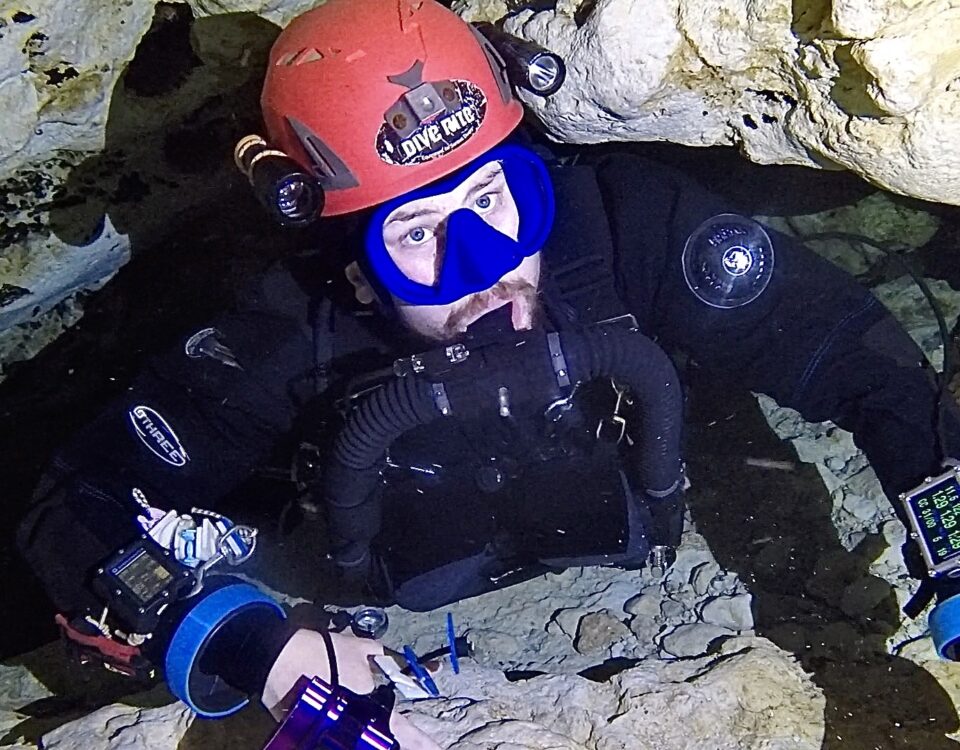
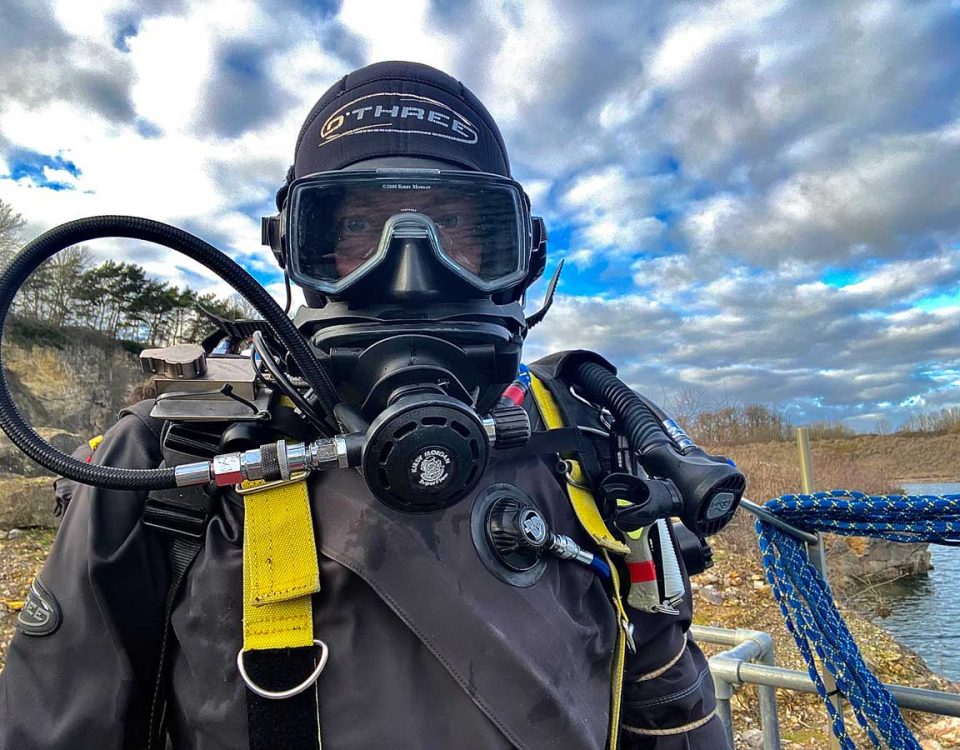
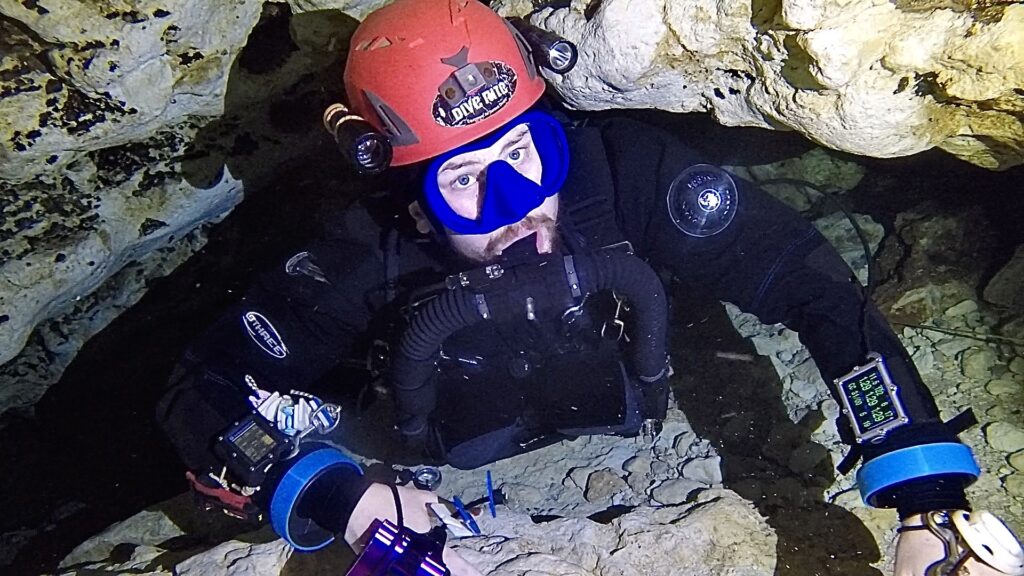
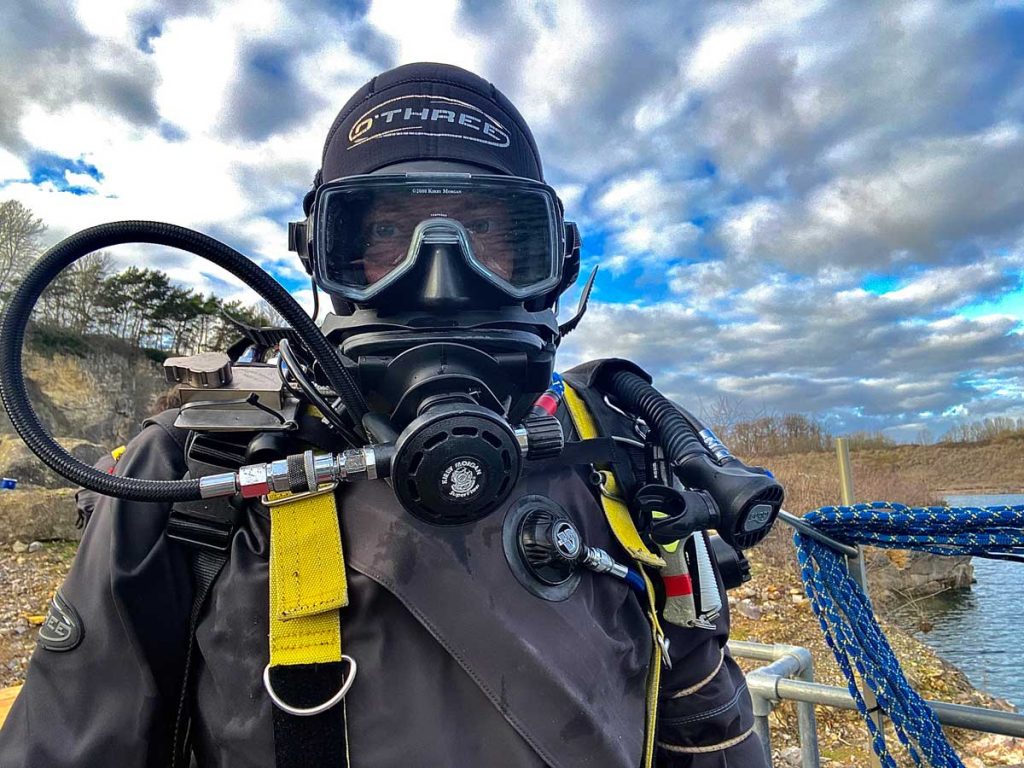
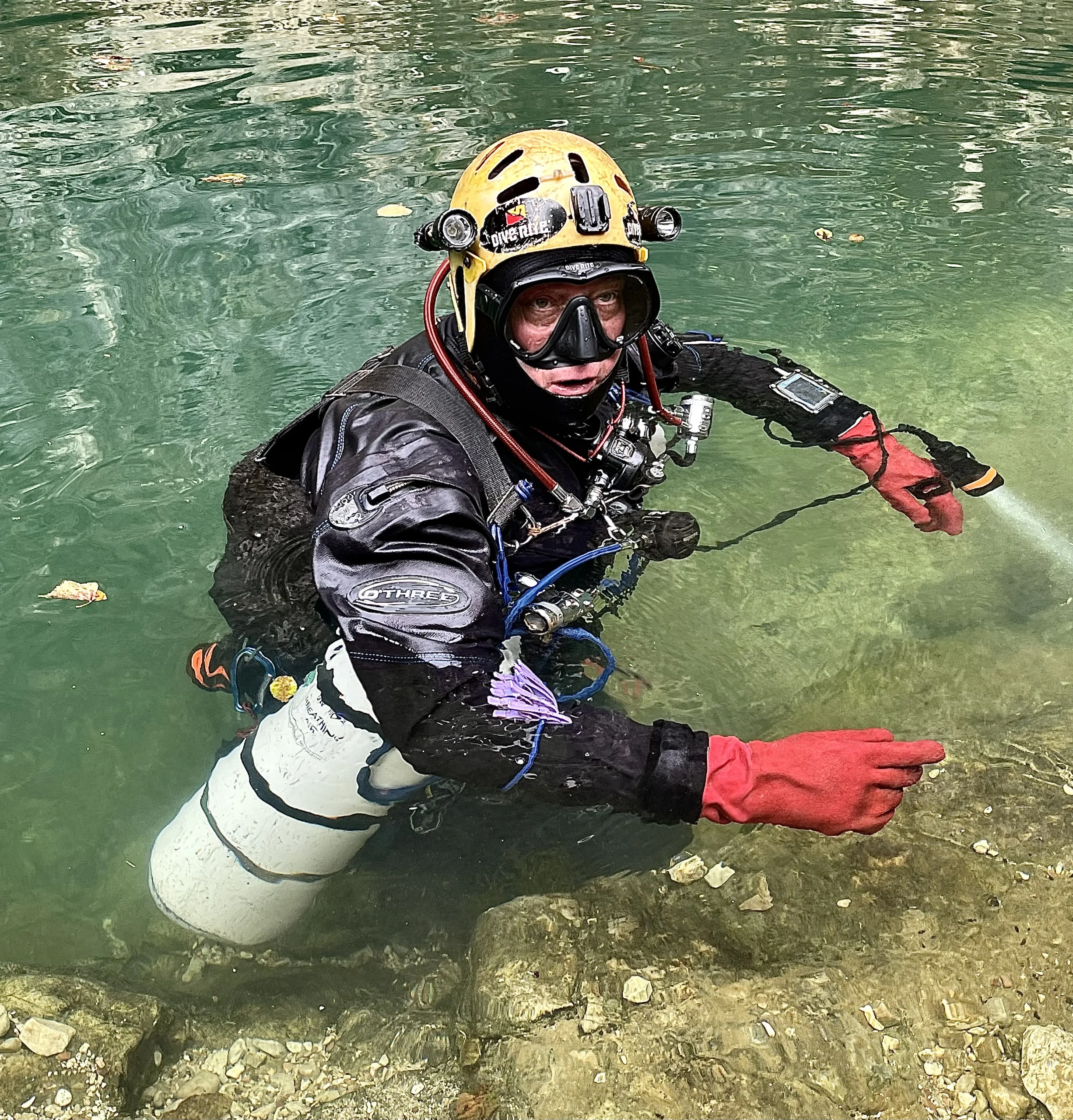
Now when Iʼm teaching, guiding or diving for pleasure, I Need to know Iʼm warm and dry. I also need to know the drysuit manufacturing team have got excellent support and the ability to repair any suit damage for me. My go to drysuit is the
OʼThree 90 Ninety and for situations that require a wetsuit Iʼll be found in the 65 Semi Dry. Having a good suit and support team is critical.
Michael Thomas
OʼThree Ambassador
TDI Instructor and Ambassador UK