

“The Humble wetsuit” Choosing alternative thermal protection.
January 13, 2022
Dive Ireland 2022
February 3, 2022Wales Best of the West
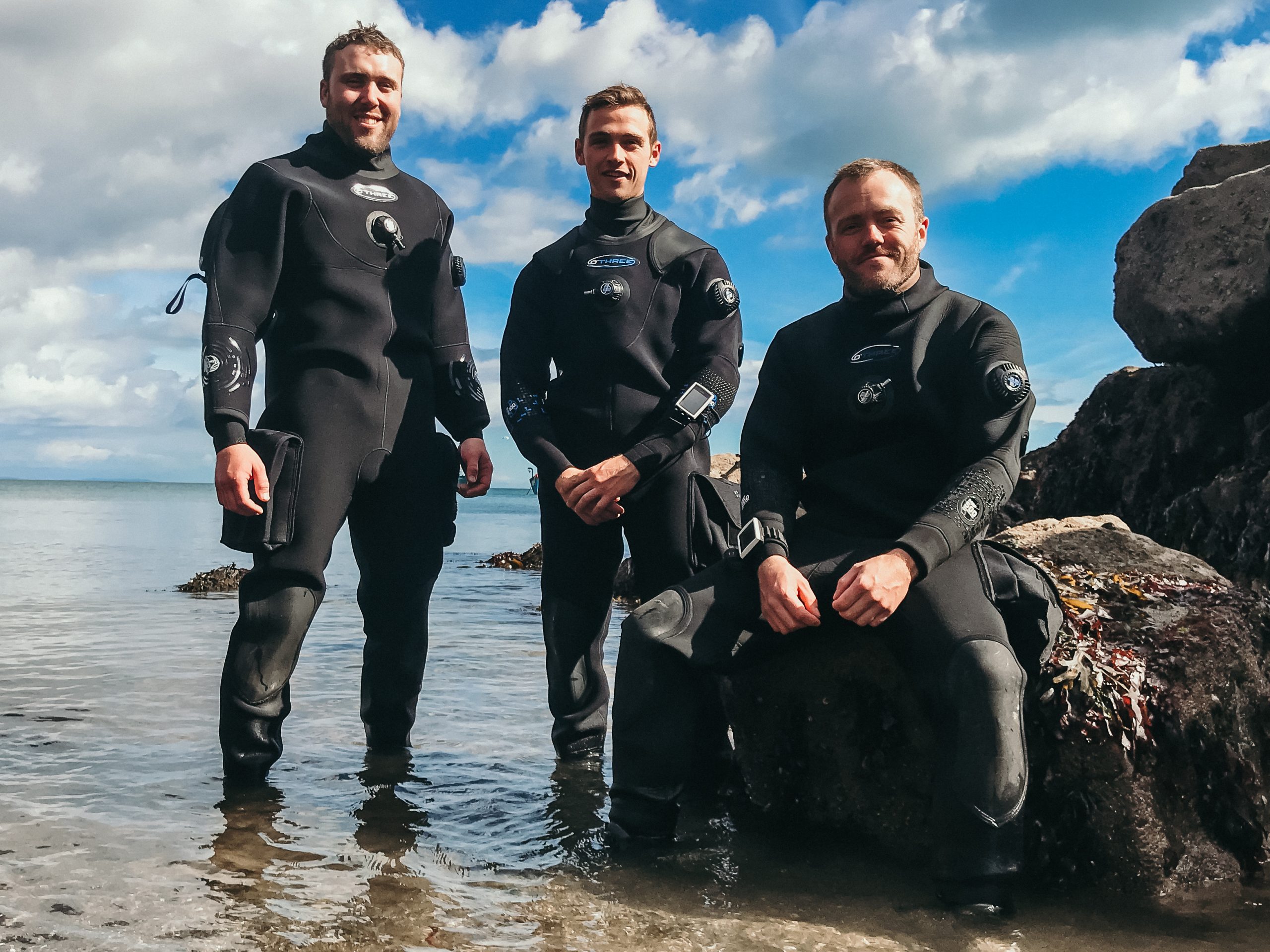
The team ready to get for a days filming underwater in the range of O’Three drysuits. Left: Ollie Putnam in a port 10, Middle: Jake Davies in a Ri2-100 Right: Lloyd Jones in a MSF 500.
Often people think that diving the UK waters are dark, cold and gloomy however, this is often true for the winter months but in the Summer the coast comes alive with often crystal clear conditions and turquoise waters. Having grown up on the Llŷn Peninsula and learnt to dive along the coast it’s incredible to think that many aren’t aware of the amazing encounters that can occur just off the coast.
As divers, we are fortunate to be able to head below the surface and see the unique species and habitats that are found below. After picking up a camera and learning the basics of filming underwater it was amazing to see the responses to clips shared on social media. As time went by and more time underwater, better filming equipment and more footage was captured which was then shared with the audience via social media as ‘JDScuba’. It was great to see how people were engaging with the encounters below the waves and having a huge interest in this hidden world. Providing people with the opportunity to see what is below the surface is special and it’s always exciting to hear people’s responses to footage and more importantly learning something new from the footage.
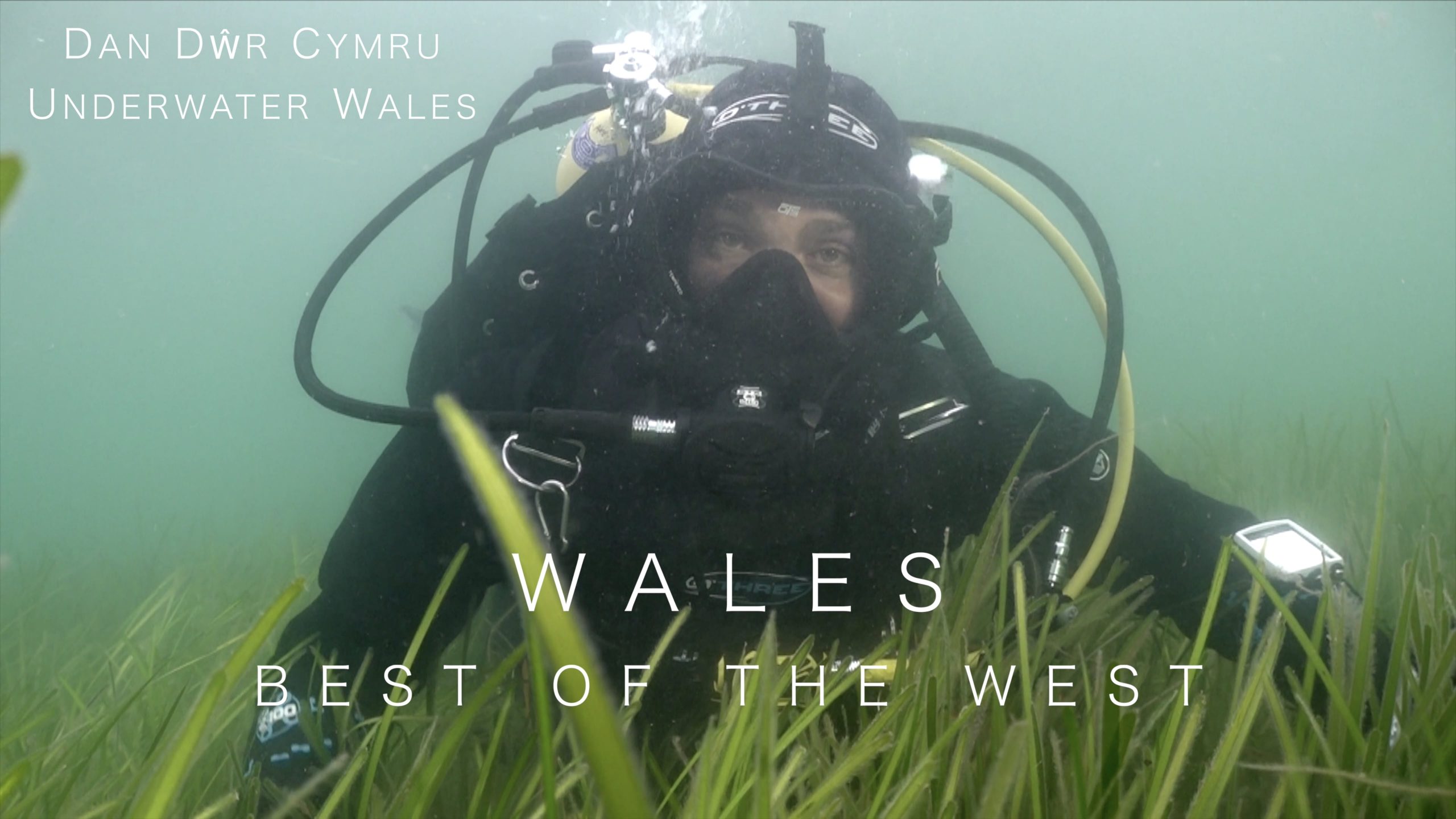
It was meeting fellow Welsh diver and underwater videographer Lloyd Jones or ‘Krakenproductions’ where the idea of creating an online Wales diving series to bridge the gap between North and South Wales diving was created. We had a vision of creating short episodes to showcase some favorite shore dives and reveal that diving along the Welsh coast can be easily accessible and that you don’t have to go out deep or on a boat to have some amazing dives and see a diverse range of marine life and habitats. We set out to plan the series and on the way brought in a now honorary Welsh diver and underwater camera operator ‘Ollie Putnam’ to complete the team.
Between the three of us we set out to bring the exciting idea to life. As soon as the weather improved during the spring we got weekends planned to get out filming, but as it was a project driven on passion, weekends were limited and we knew that a lot would have to be done in a short time. Filming locations included Porth Ysgaden and Porthdinllaen in North Wales and Martins Haven and Stackpole in Pembrokeshire. Each chosen for their specific attractions and accessibility.
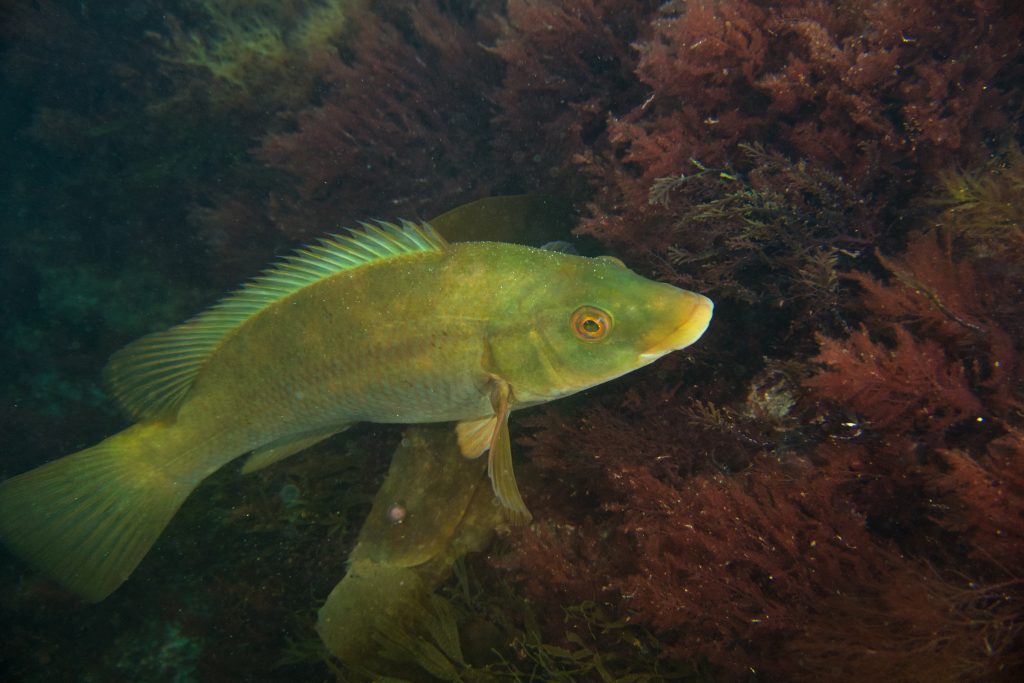
Ballan Wrasse (Labrus bergylta) are commonly seen at Porth Ysgaden, a species that have a range of colours making them look more of a tropical species. Photo credit: Jake Davies
To kickstart the series we were up in North Wales on the Llŷn Peninsula at Porth Ysgaden. This shallow sheltered bay on the North coast of the Llŷn Peninsula is an amazing site that is easily accessed, sheltered, shallow and great for all levels of divers.
Below the waves there’s a diverse range of marine life from European lobsters hiding within the crevices to colorful wrasses which weave through the Kelp forest. After an awesome day’s diving and filming, we wanted to reveal what it’s like diving the site at night as the darkness brings more creatures out from hiding, and like many night dives, it really did bring out some surprises.
Up next, we headed East to the quiet fishing village of Porthdinllaen as this sheltered bay is home to a very special marine habitat… the Seagrass meadow. The seagrass meadow in Porthdinllaen is one of the largest and densest in Wales, and as a habitat seagrass meadows are incredibly important as they provide a huge range of ecosystem services from removing carbon dioxide and producing oxygen to acting as a nursery for many commercial fish species that include Cod (Gadus morhua) and Plaice (Pleuronectes platessa)).
What makes seagrasses even more special is that they are flowering plants like that on land, and are the only ones found within the sea.
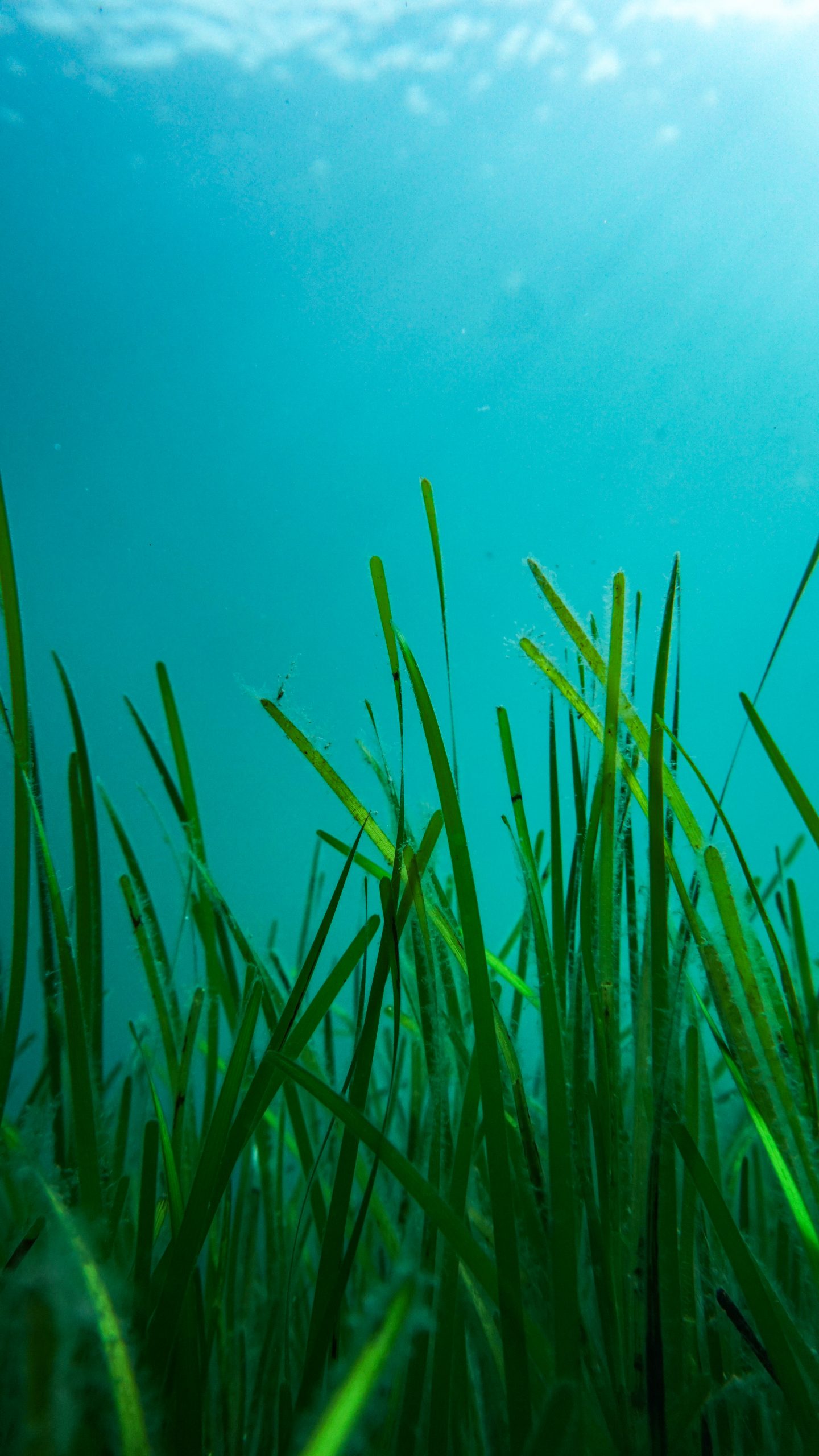
Amongst the vivid green seagrass blades of Porthdinllaen. Photo credit: Jake Davies.
The meadow was the main reason we wanted to include it within the series and share it’s importance by taking the viewers amongst the green blades hidden below the surface in front of one of the best beach pubs in the world, the Ty Coch.
Diving the meadow on a calm summer’s day is unlike diving in any other UK marine habitat.
During the episode we also wanted to share more about the conservation work which goes on at Porthdinllaen and wider seagrass work such as work carried out by the charity Project Seagrass who do incredible work on increasing knowledge and researching seagrass.
During the time below the waves, we certainly weren’t disappointed, long hours were spent exploring the meadow, where one dive especially ended up into the early hours of the morning.
After plenty of great diving up north, we headed south to explore the Pembrokeshire coastline where we had Martins Haven and Stackpole on our list.
First up was Martins Haven, situated within the Skomer Marine Nature Reserve, known for its diverse range of marine life including some exciting species such as the Pink Sea Fan (Eunicella verrucosa) which is found at its most Northern limit.
The site is the deepest shore dive off the Welsh coast which also provided us with the opportunity to get some depth.
A sequence we had on our list was for the predation of scallops by the spiny starfish and after lots of perseverance we achieved this and it was exciting to see the behavior.
During the dives, we were also often followed by the large bull grey seal which is commonly seen in the bay; however, getting close to one under water is a challenge.
Bringing the trip to the end, we arrived at Stackpole, a small bay hidden away amongst the Pembrokeshire cliffs. Similar to the North Wales sites, Stackpole is shallow but has a range of habitats from gullies to sand.
Over the years the site has provided lots of exciting encounters and it really did deliver during our dives.
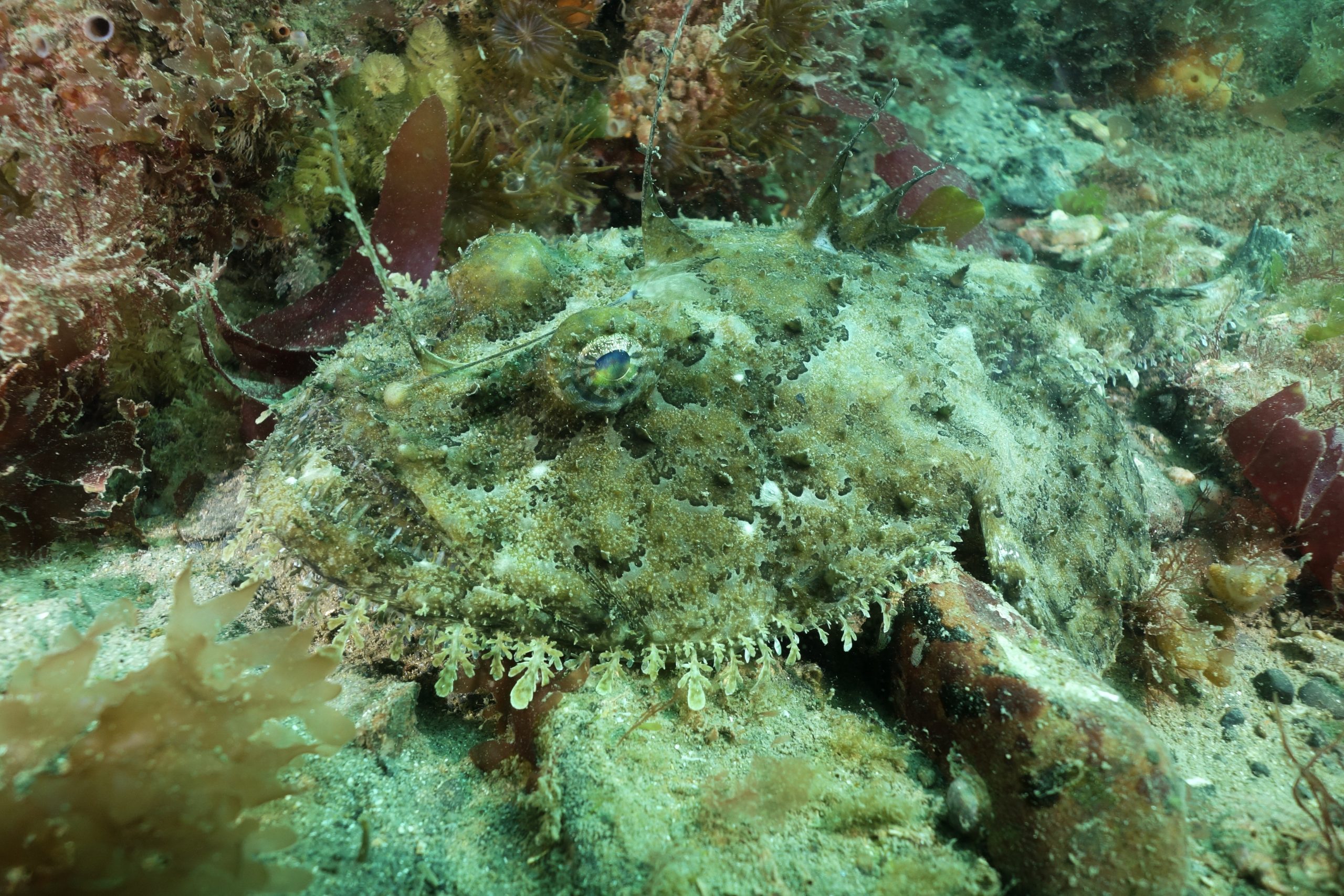
Heading along the reef, we were extremely fortunate to come across one of the top ambush predators, the Anglerfish (Lophius piscatorius) which was camouflaged on the reef providing an exciting moment to feature a rarely seen species off the Welsh coast.
-

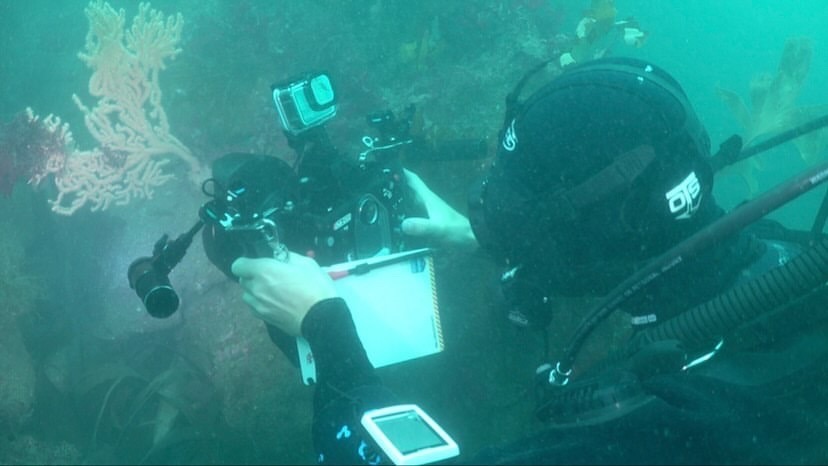
- Jake filming the famous pink Seafan in Martins Haven.
-

- Hidden on the reef, the Anglerfish (Lophius piscatorius) waits patiently for its next potential meal. Photo credit: Jake Davies.
The reef revealed lots of diverse species, but we also wanted to take the opportunity to reveal some of the issues faced by the marine environment such as marine pollution but also highlighting some of the great conservation projects such a the Neptunes Army of Rubbish Cleaners who volunteer to clean up beneath the waves. As daylight faded away, the only way to finish the series was one final night dive to reveal more about the marine life that occurs after dark. Like all the other sites, the darkness didn’t let us down and we managed to capture some great species including juvenile small eyed rays (Raja microocellata) hunting across the sand, a sight which we were hoping for. To see what other species were encountered checkout the final episode.
Filming Wales Best of the West was an unforgettable series of days diving, driven by the passion of diving, filming and showcase the diversity that is often overlooked below the waters of the Welsh coast. Many of the long dives couldn’t have been done without the support of O’Three’s top quality comfy and warm drysuits, gloves and hoods where the team also had the range of suits from Jake in a RI2-100, Lloyd in the MSF500 and Ollie in the Port 10.
As a series we hope it inspires others to explore their local coastline or even get in the water themselves by diving or just snorkeling to see the habitats and species. As well as the huge wellbeing benefits that are provided by just being in the outdoors and in the water. We hope you enjoyed the series and hope to continue doing more to reveal the Best of the West.
Head over to the Dan Dŵr Cymru YouTube account to watch the series: Dan Dŵr Cymru
