
General Questions
Toggle content goes here, click edit button to change this text.
Toggle content goes here, click edit button to change this text.
Toggle content goes here, click edit button to change this text.
Toggle content goes here, click edit button to change this text.
Toggle content goes here, click edit button to change this text.
Toggle content goes here, click edit button to change this text.
Drysuit Specific Questions
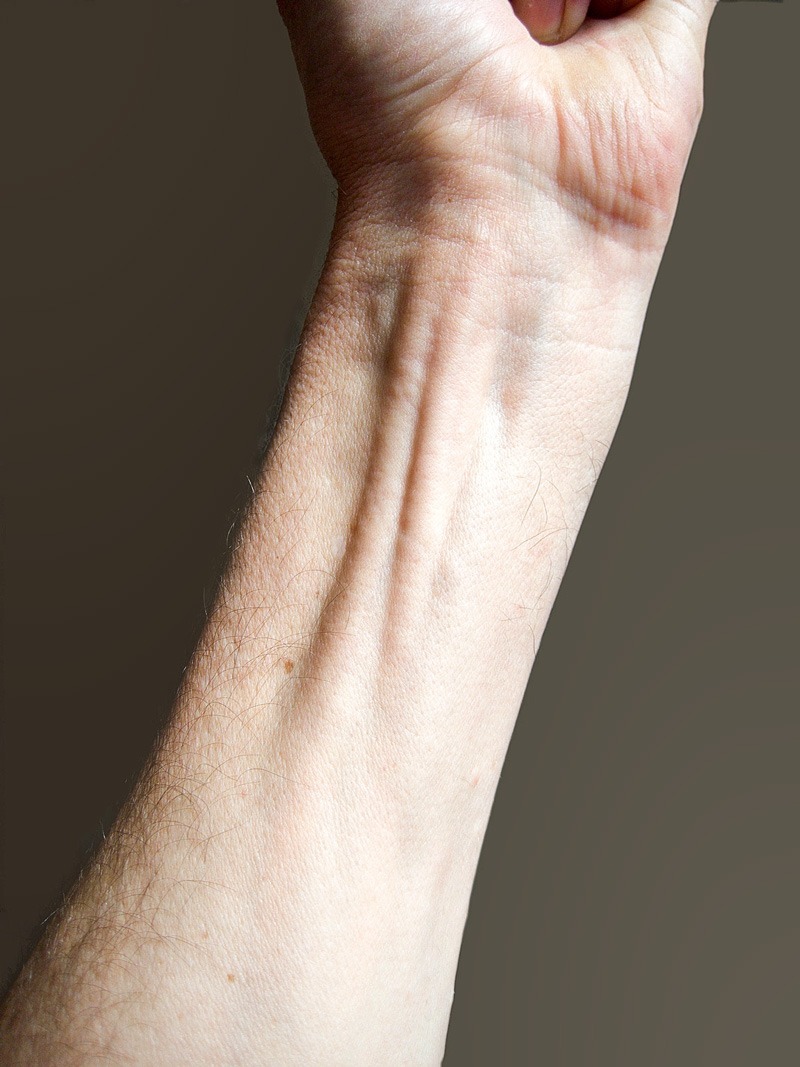
If you have protruding tendons on your wrist like the ones pictured below you may find you have had leaky wrist seals. We have encountered this in the past and can fix the issue using our Super Supple Neoprene wrist seals and some tailoring.
Please let us know when ordering your suit that you have this issue.
Toggle content goes here, click edit button to change this text.
Toggle content goes here, click edit button to change this text.
Toggle content goes here, click edit button to change this text.
Toggle content goes here, click edit button to change this text.
Thermal and Base Layers
To maximise the characteristics of all dry suits, choose your base layers / under suit carefully, and you will maintain excellent flexibility whilst still being able to dive in some very cold conditions.
Over the years experience and feedback has proved that one set of PBB+ is all that is needed under an MSF-500tb dry suit and will be effective for most of the year, for most divers. If you wear a thinner dry suit, such as the Ri 2-100 or similar, then the PBB Extreme is recommended.
This double layer will protect you from the very cold and if sized properly will not hinder your movement when fully kitted up.
PLEASE NOTE: Ultimately, it is you the wearer of the dry suit that is generating the heat, the suit you choose to wear (as long as it is a neoprene suit) is simply the insulator. A membrane style of suit will offer virtually no thermal protection.

The thermal guidance information above is purely that, a guide. If you are a petite lady and feels the cold when snuggled up in bed with a winter duvet on all year round, or you are a guy that wears a T-Shirt in the depths of winter your reliance on a neoprene dry suit from a thermal perspective is at either end of the scale.
Remember, if your base layer / under suit combination is coming up short at certain times of the year, just add flexible layers using the correct fabrics to improve your resistance to the cold. Think climbers and skiers. Get it wrong and you will increase bulk and buoyancy.
Please be sensible realistic and careful when choosing the appropriate thermal protection. We are all different.
Your life could depend on it.
Toggle content goes here, click edit button to change this text.
Toggle content goes here, click edit button to change this text.
Toggle content goes here, click edit button to change this text.
Toggle content goes here, click edit button to change this text.
Toggle content goes here, click edit button to change this text.